The Laser and Starboard (Home on the Range, Part VI), 1975
Archive Post: 2/13/2022
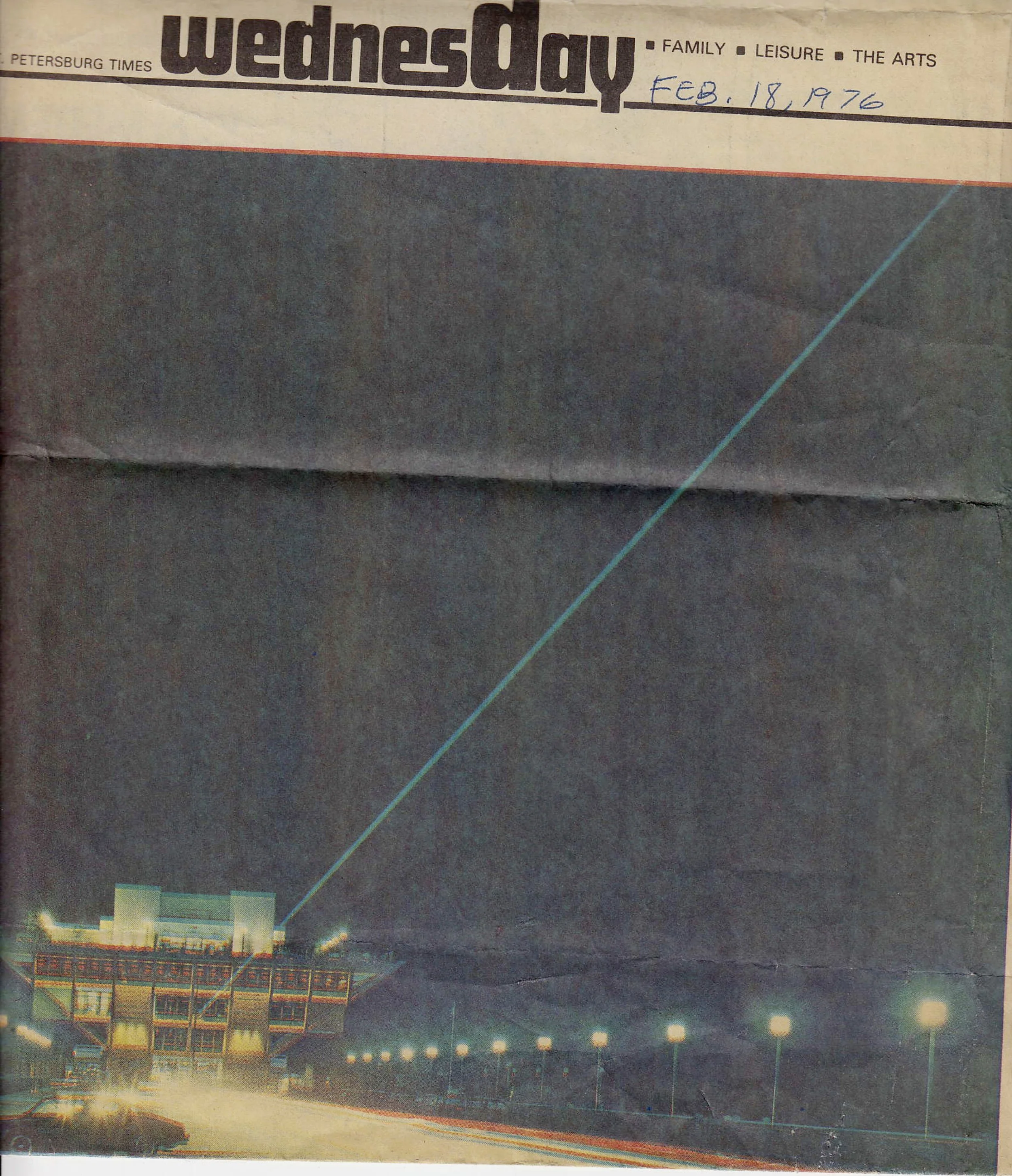
Commissioned by the St. Petersburg Arts Commission and the City of St. Petersburg, FL, with additional funding from a grant provided by the National Endowment for the Arts.
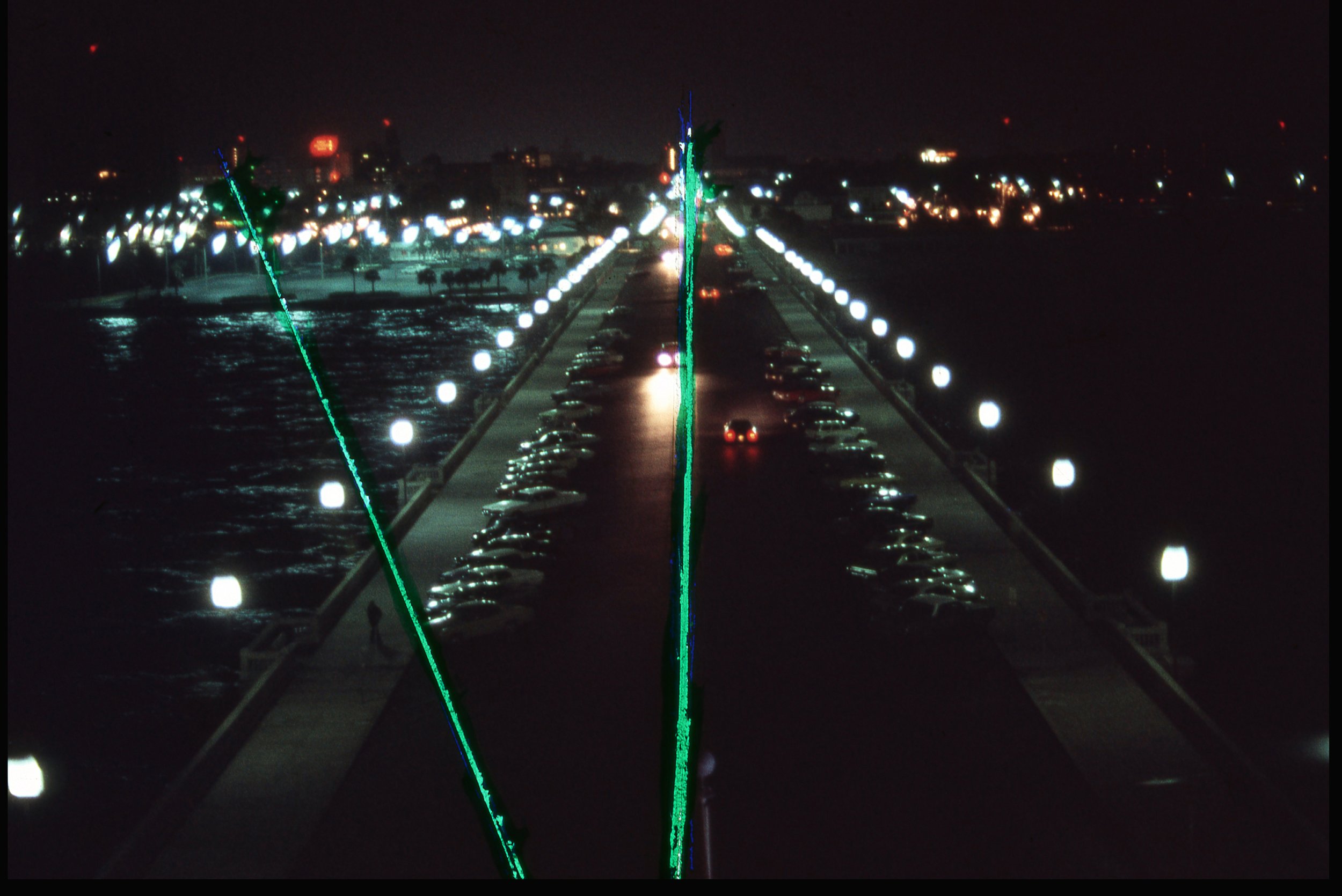
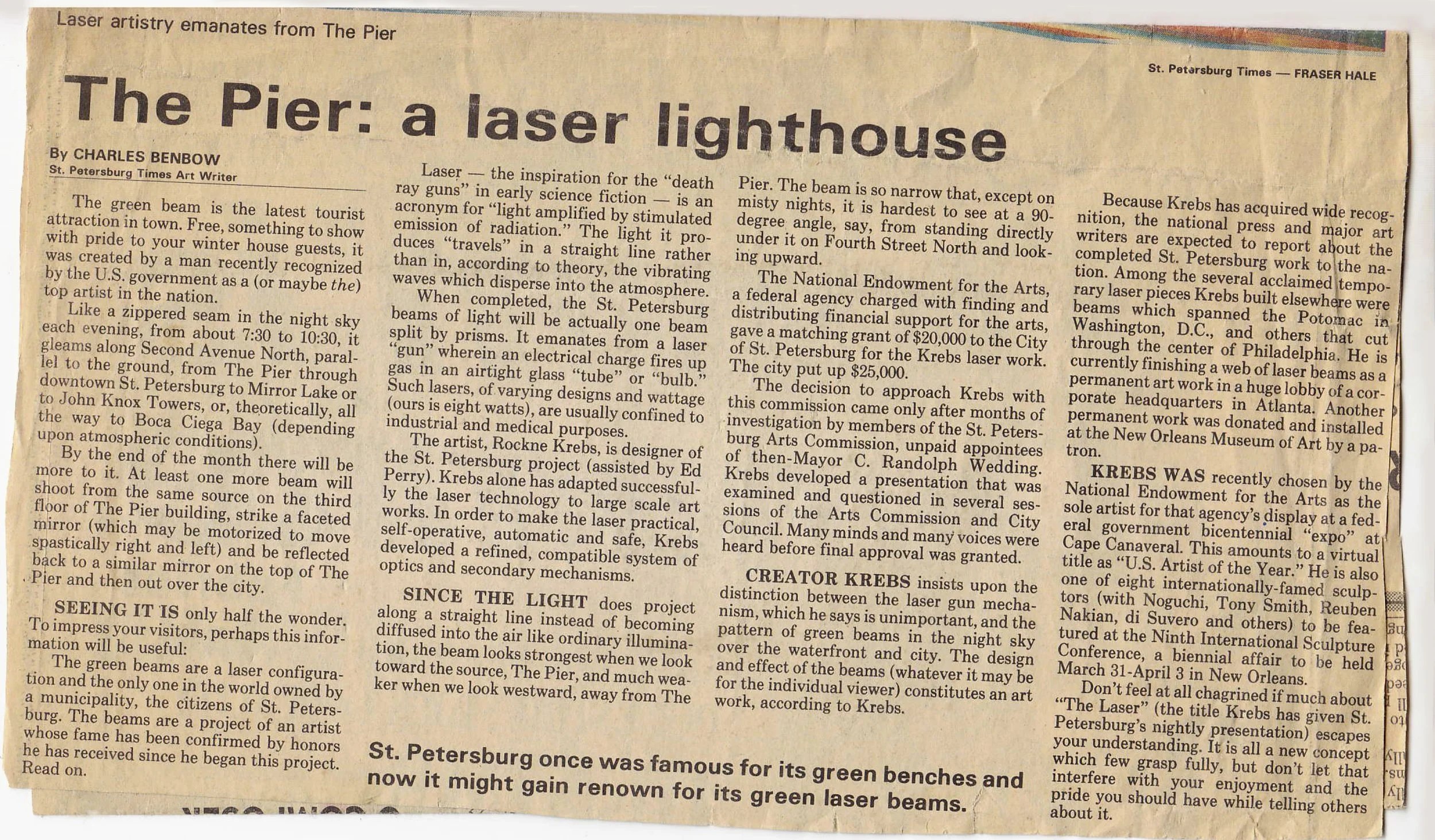
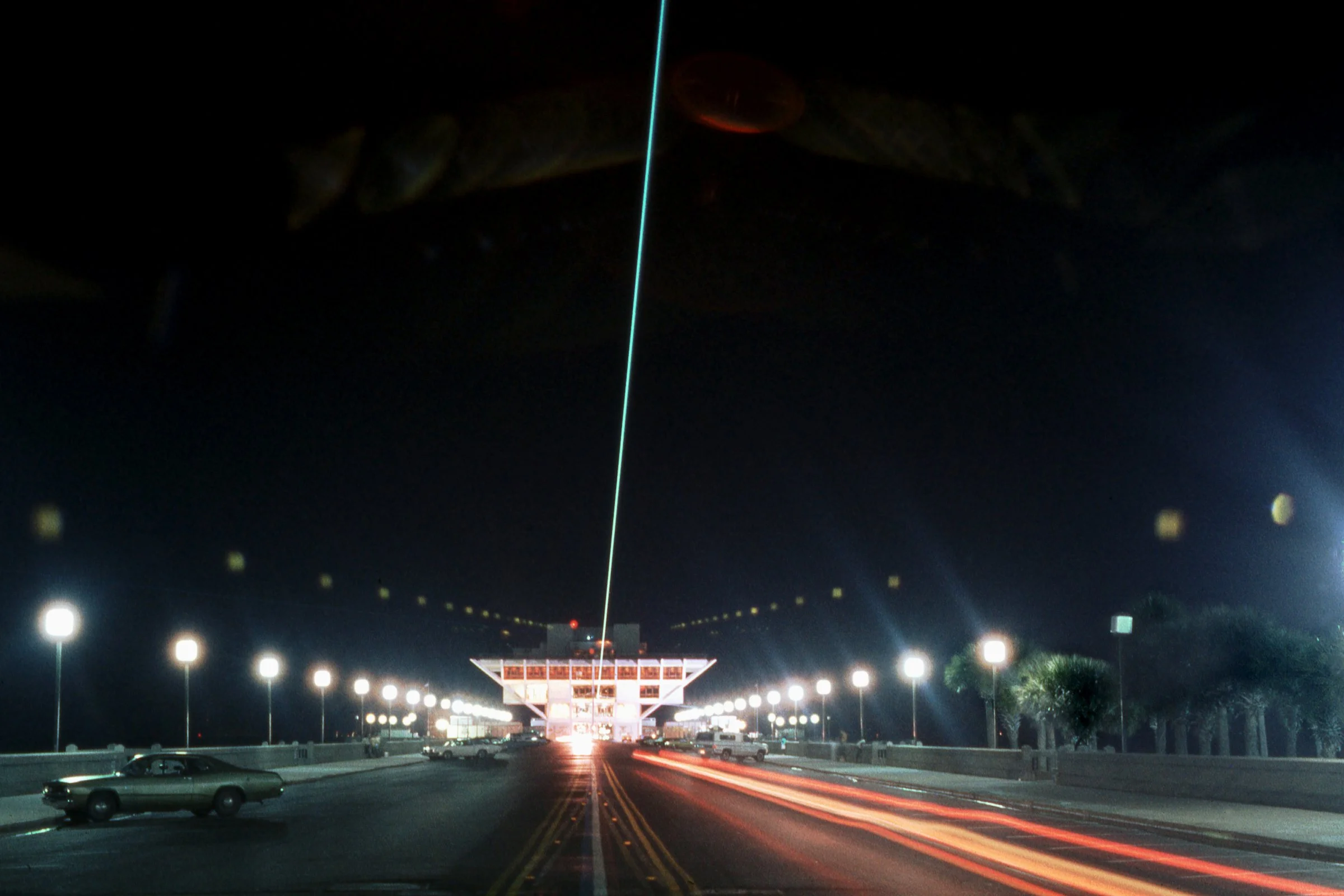
The laser would kick on right at sunset, as a subtle reminder of Florida’s famous flash of green, the natural phenomenon that occurs at the moment the sun sinks into the Gulf. -Glenn Anderson
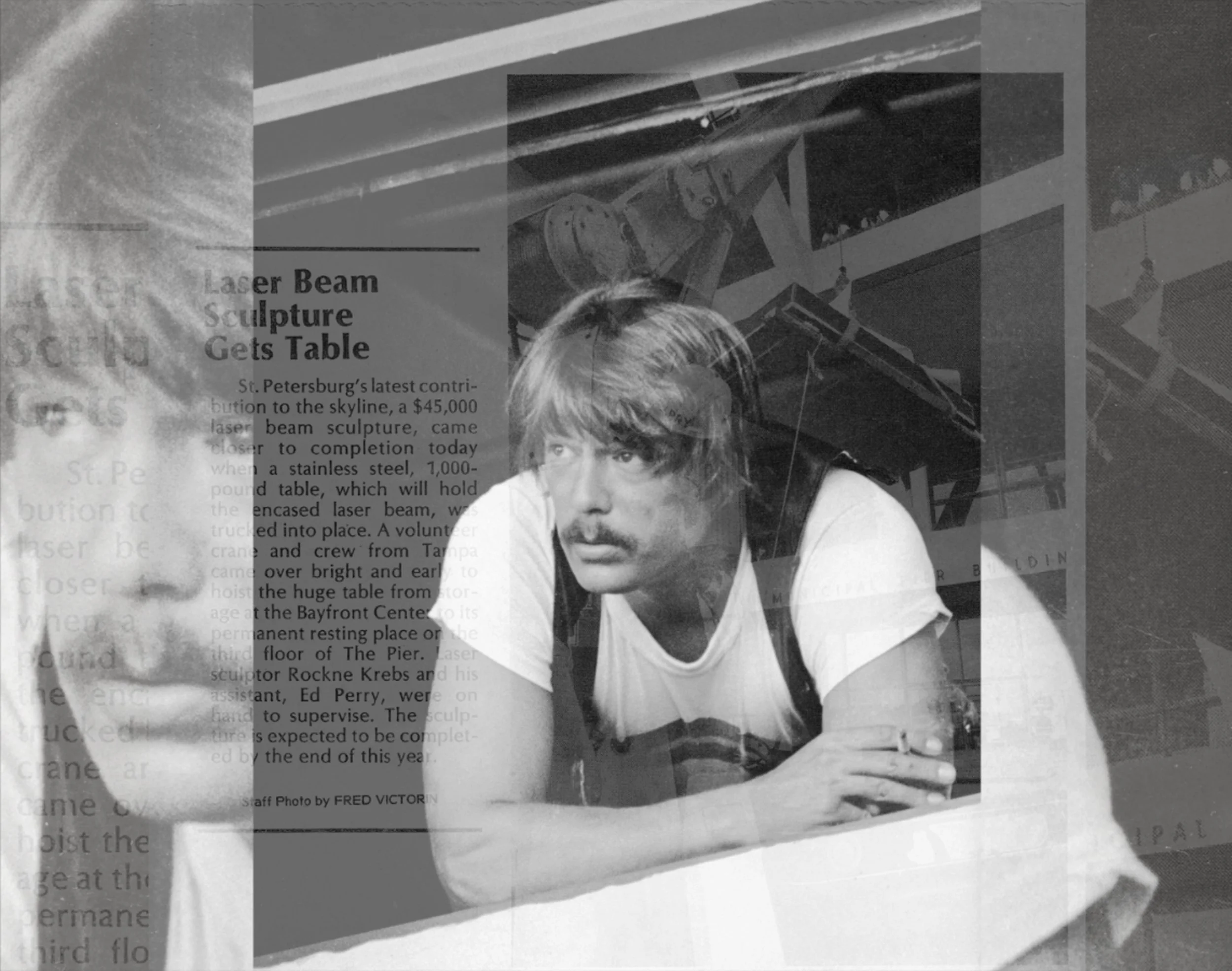
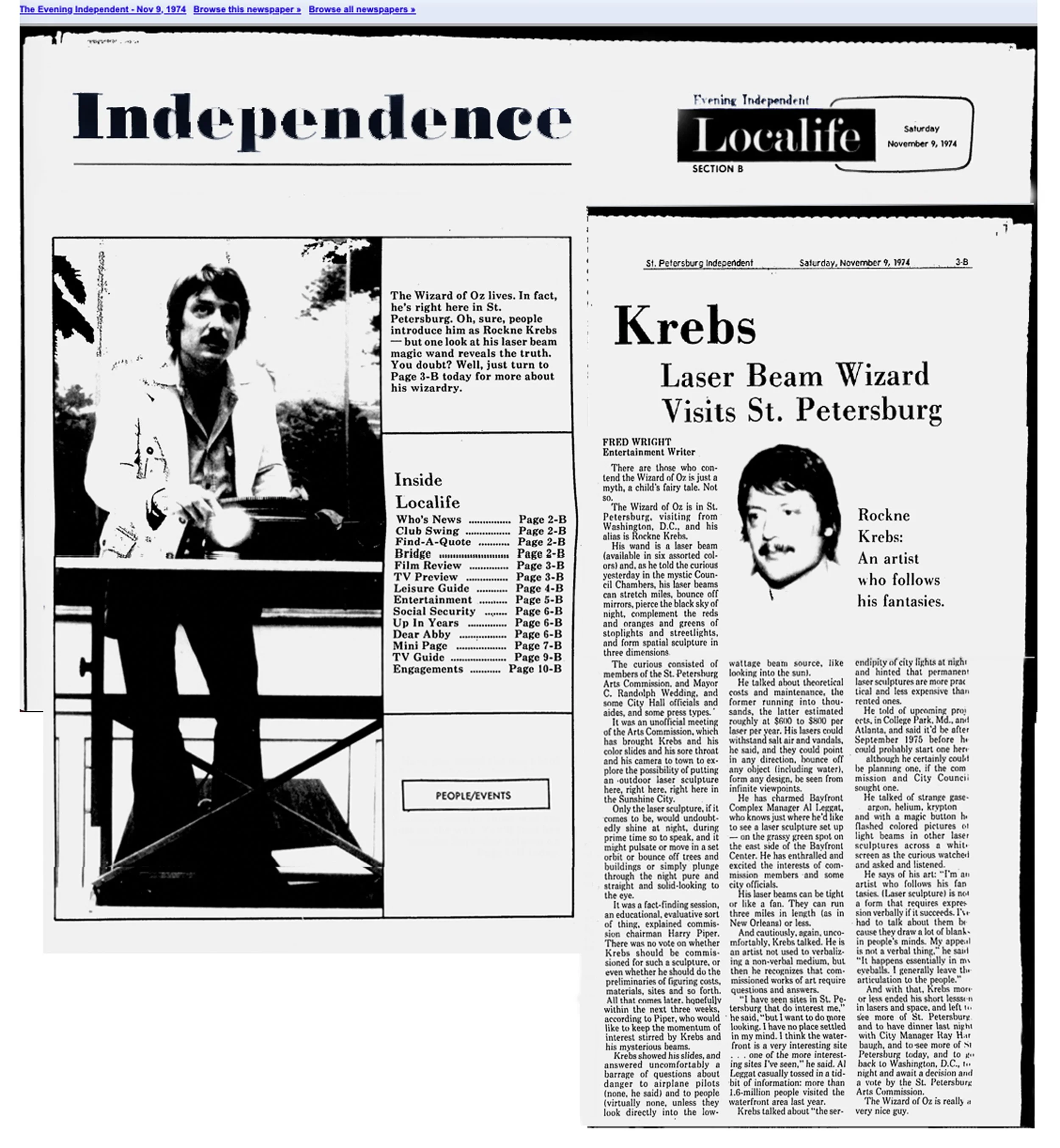
Photographs by Bill Tyjewski of Rockne as he watches as a 1,000-pound steel laser table is lifted through the window.
Archive Blog Post: 2/13/2022
Featured in the St. Pete Catalyst
When The Laser was working, said Anderson, it was “other worldly and the eighth wonder of the world. But when it was broken down, it was a curse.”
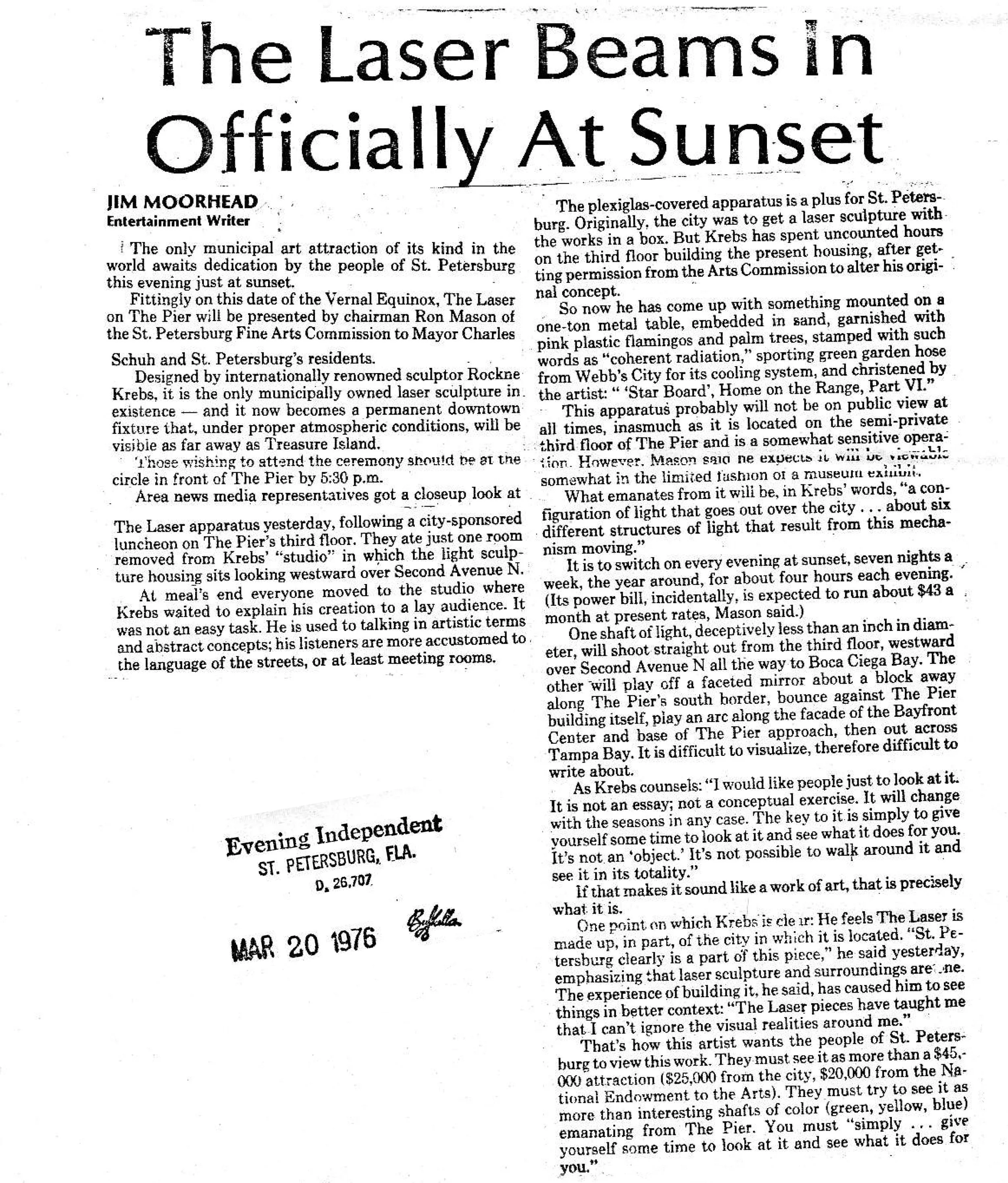
“As Krebs counsels: “I would like people just to look at it. It is not an essay, not a conceptual exercise. It will change with the seasons in any case. The key to it is simply to give yourself some time to look at it and see what it does for you. It’s not an ‘object.’ It’s not possible to walk around it and see it in its totality.”
If that makes it sound like a work of art, that is precisely what it is.” Jim Moorhead, St. Petersburg Independent, 1976, The Laser Beams In Officially at Sunset.
“Local newspeople, Anderson believes, didn’t know “beans from bullets” when it came to accurately describing Krebs’ work, and what it did. Laser art was in its infancy, and there was an entirely new palette of words to be learned.
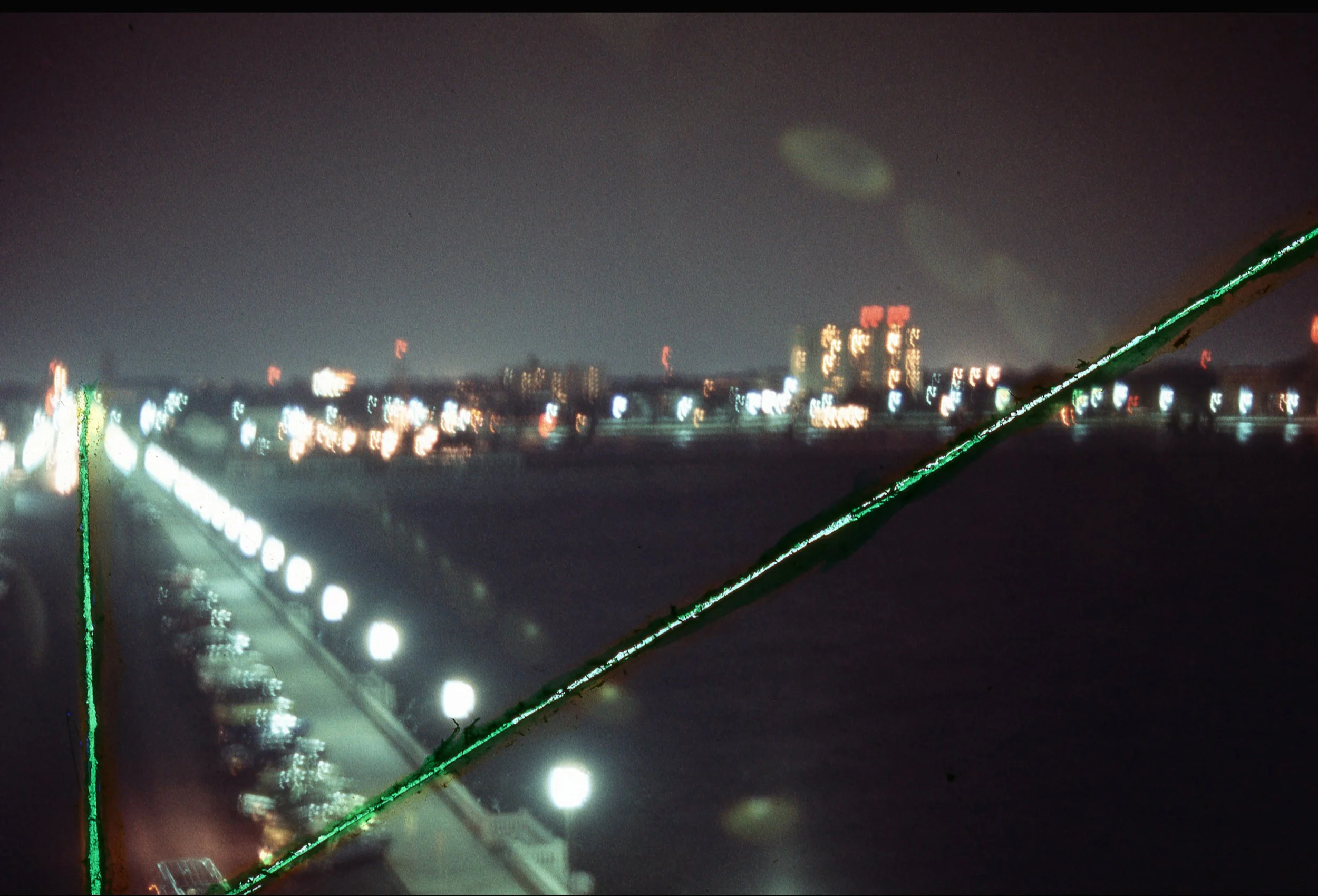
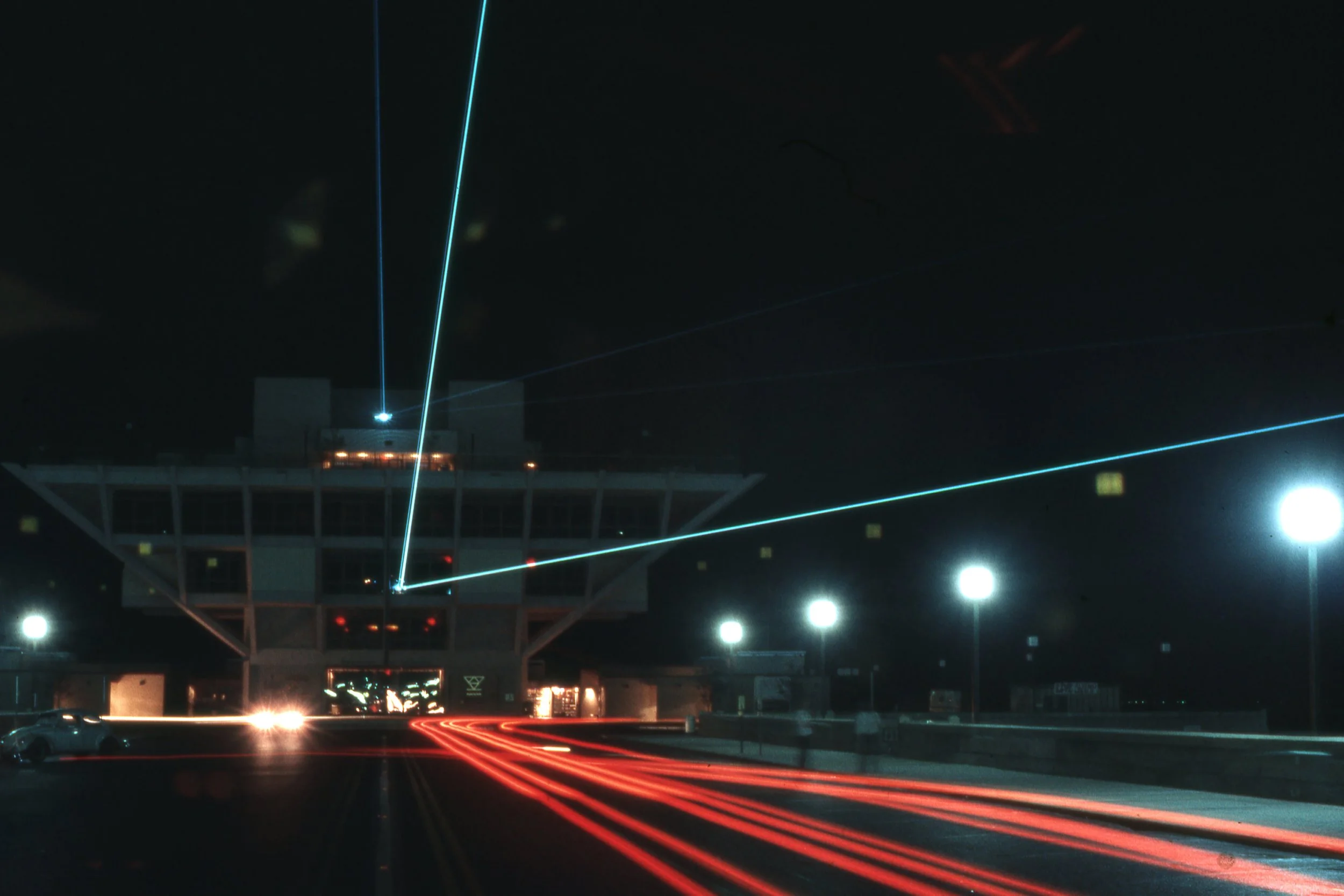
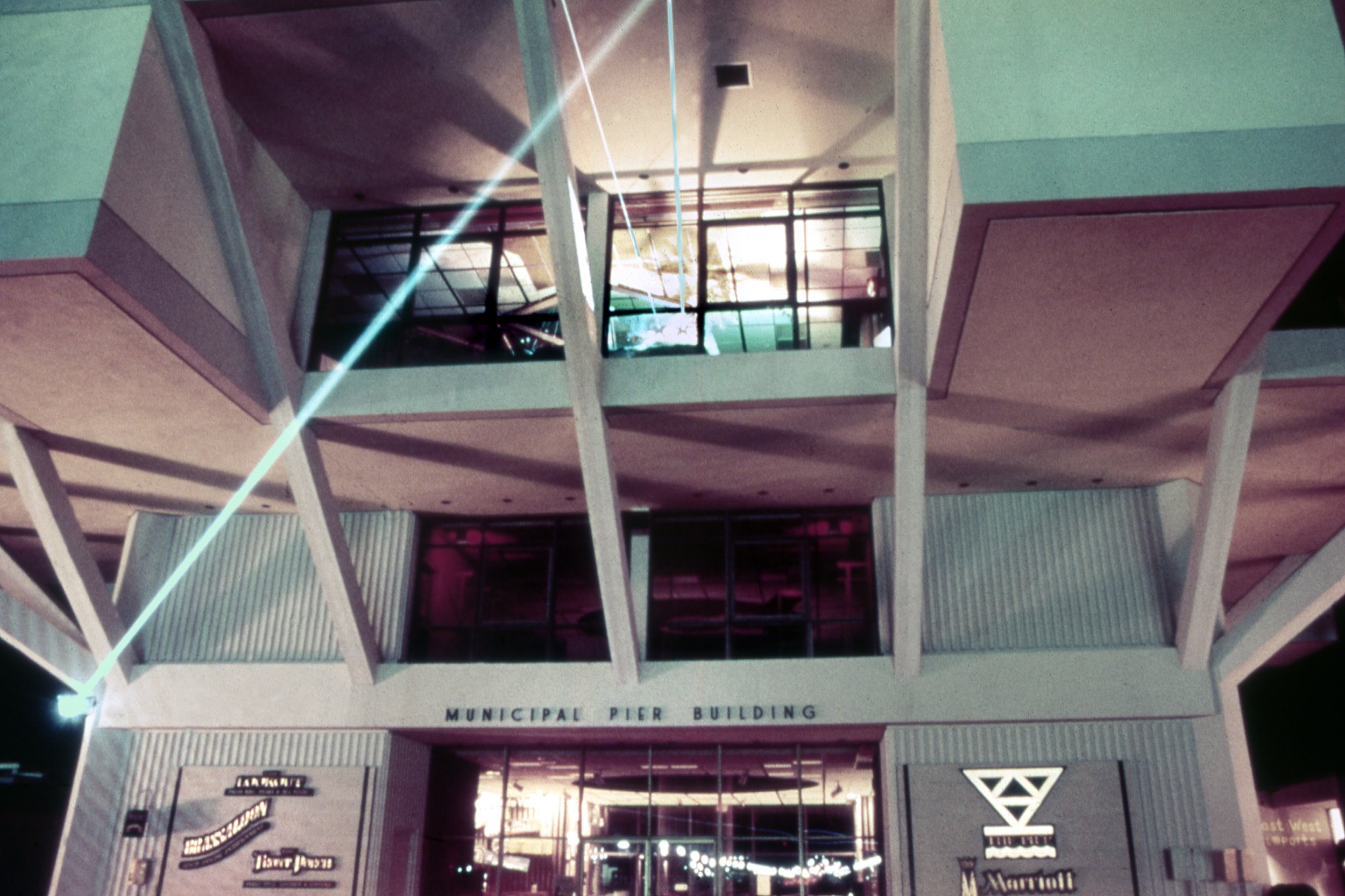
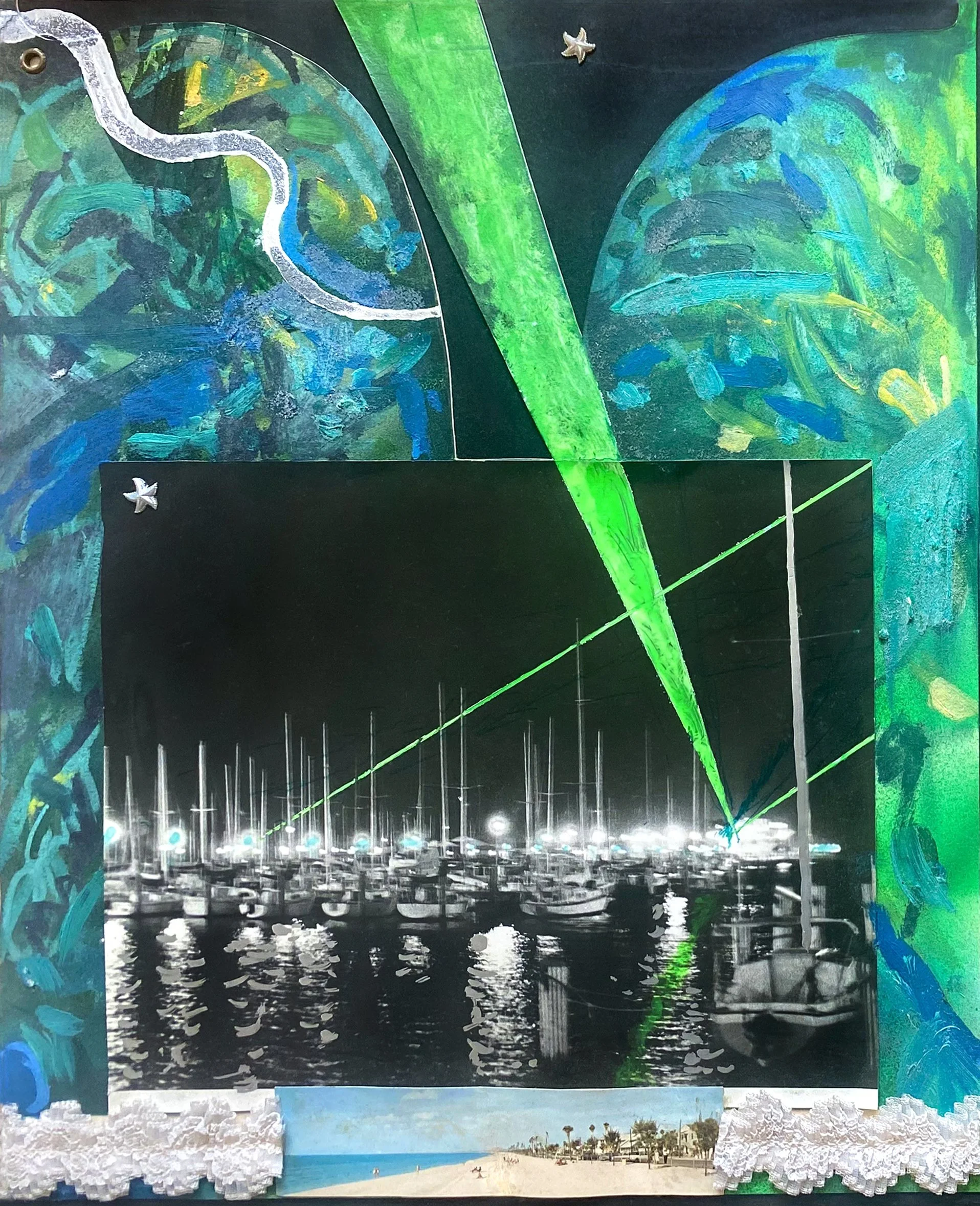
“The main laser beam would go right over the top of 2nd Avenue, all the way out and actually out into space at that point,” he says. “There were reports of people out in the middle of the Gulf of Mexico that saw that green thing go over the top. And were stunned by the whole thing.”
The laser would kick on right at sunset, as a subtle reminder of Florida’s famous “flash of green,” the natural phenomenon that occurs at the moment the sun “sinks” into the Gulf.
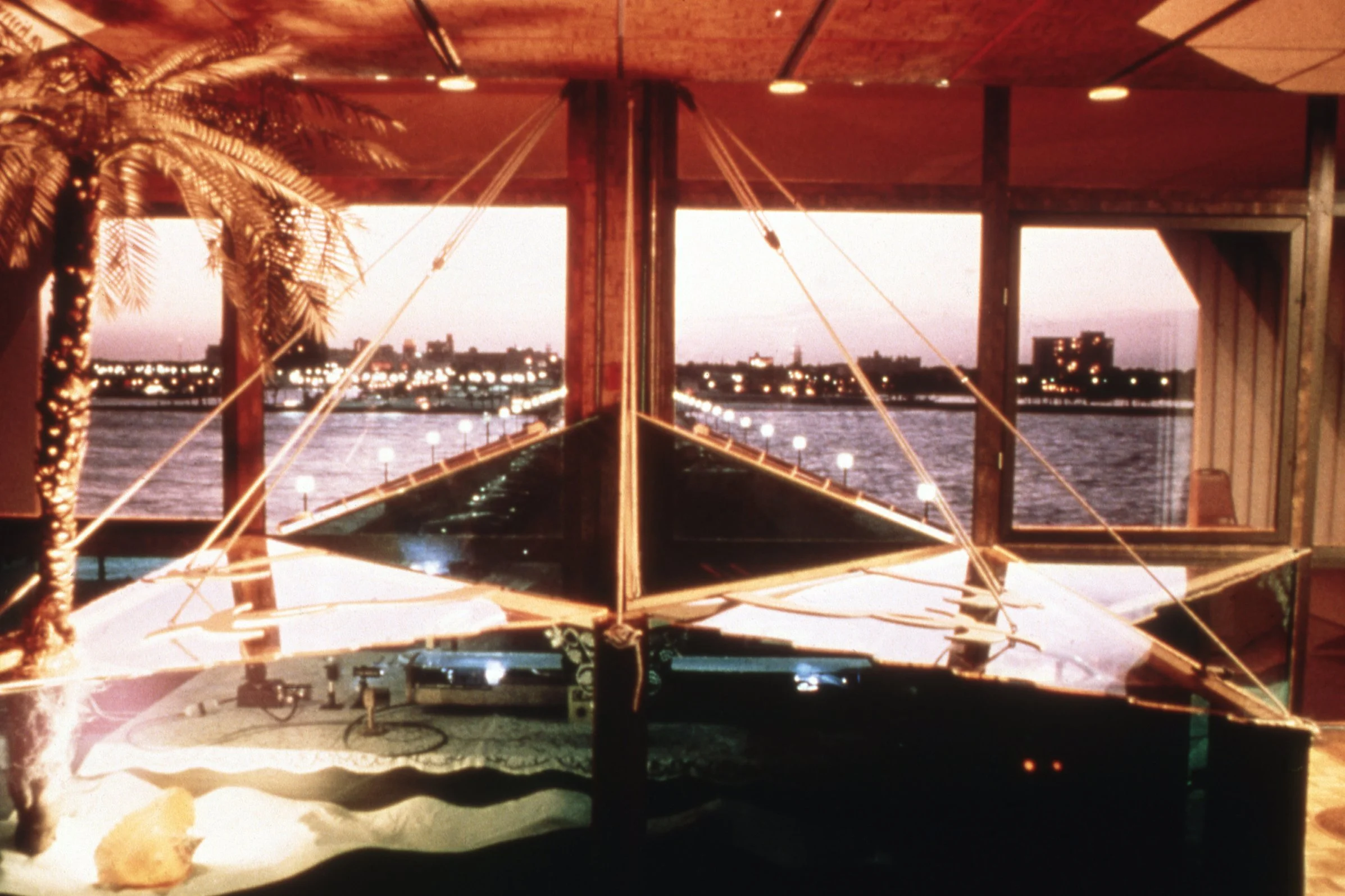
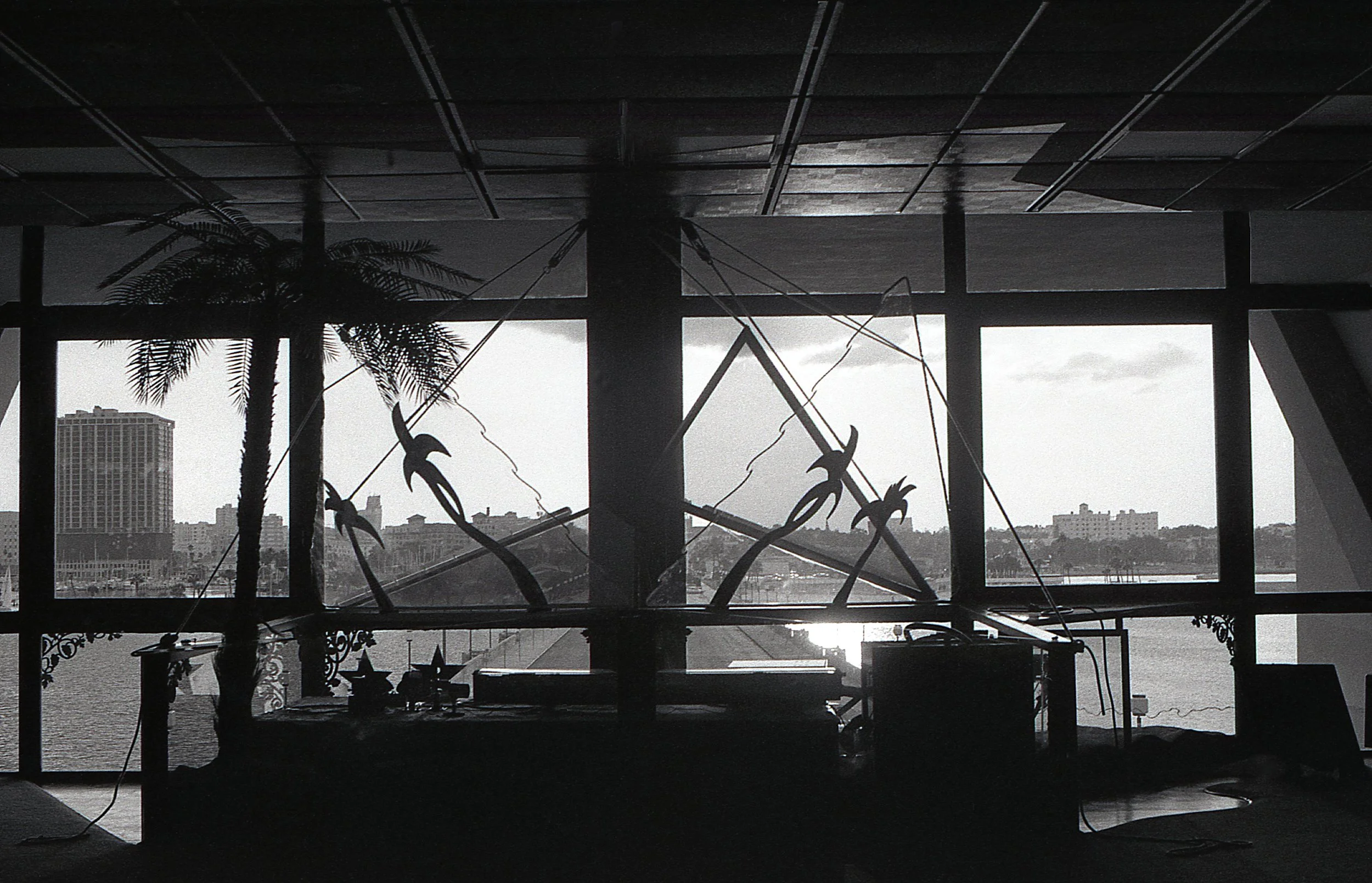
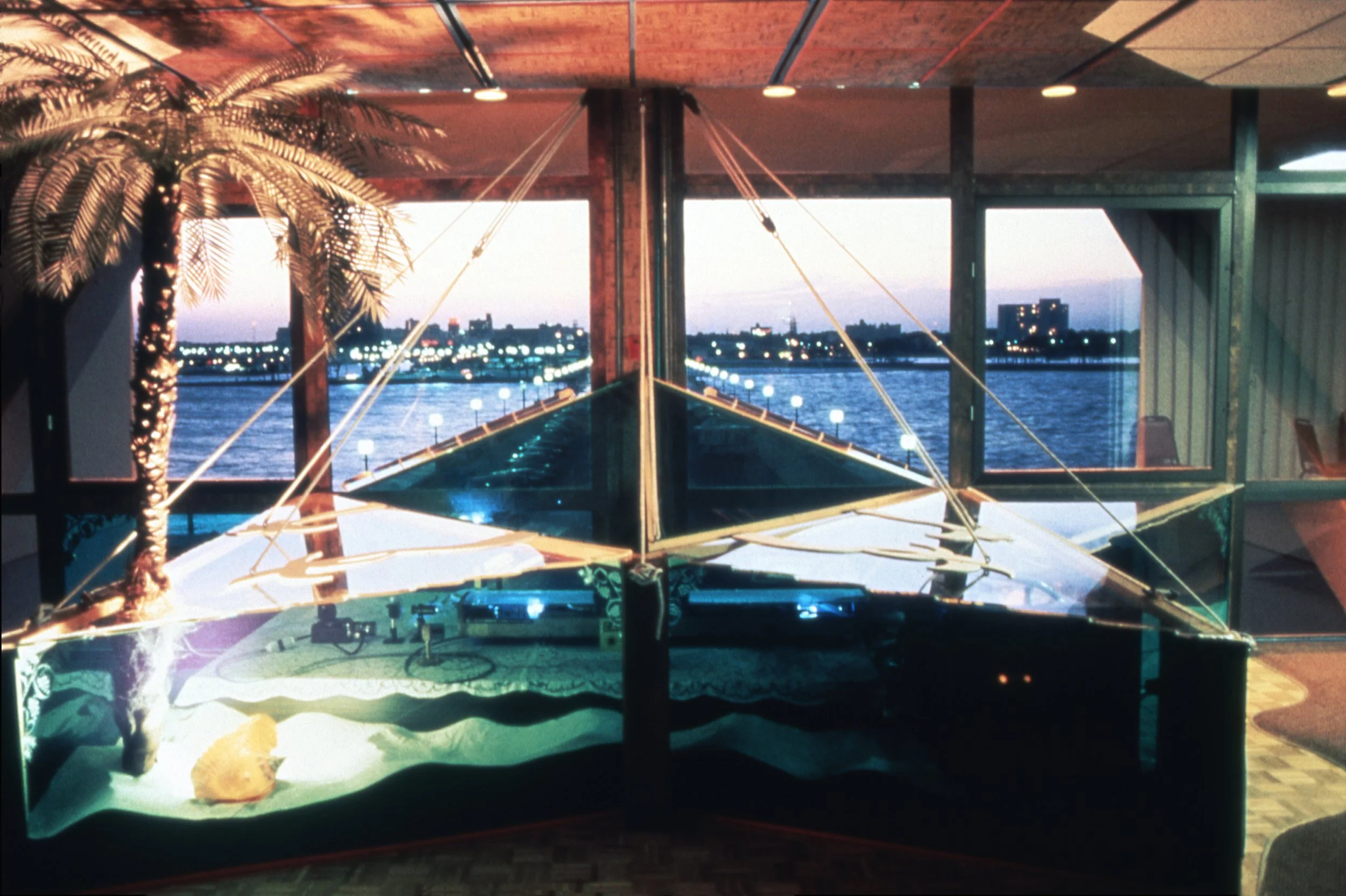
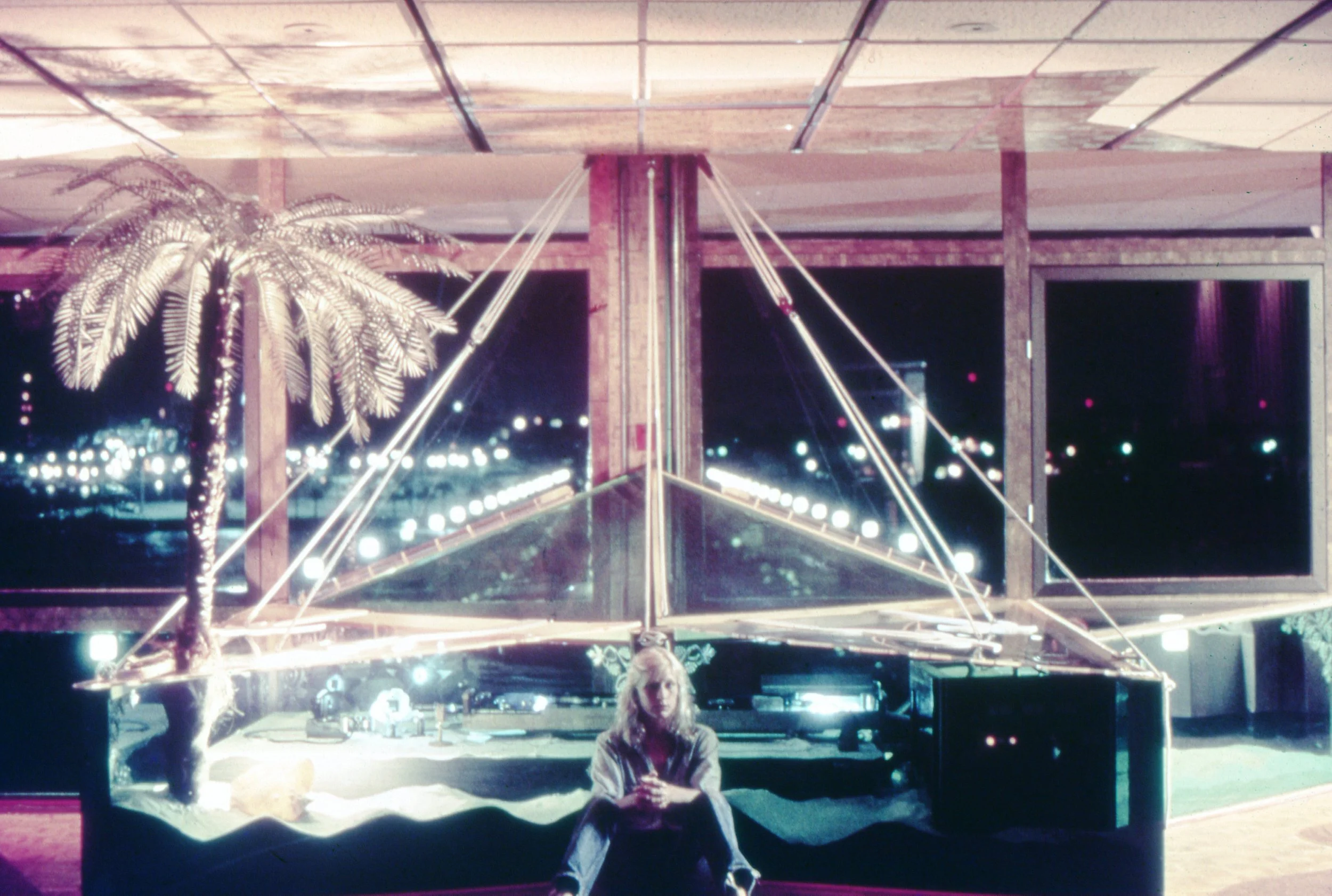
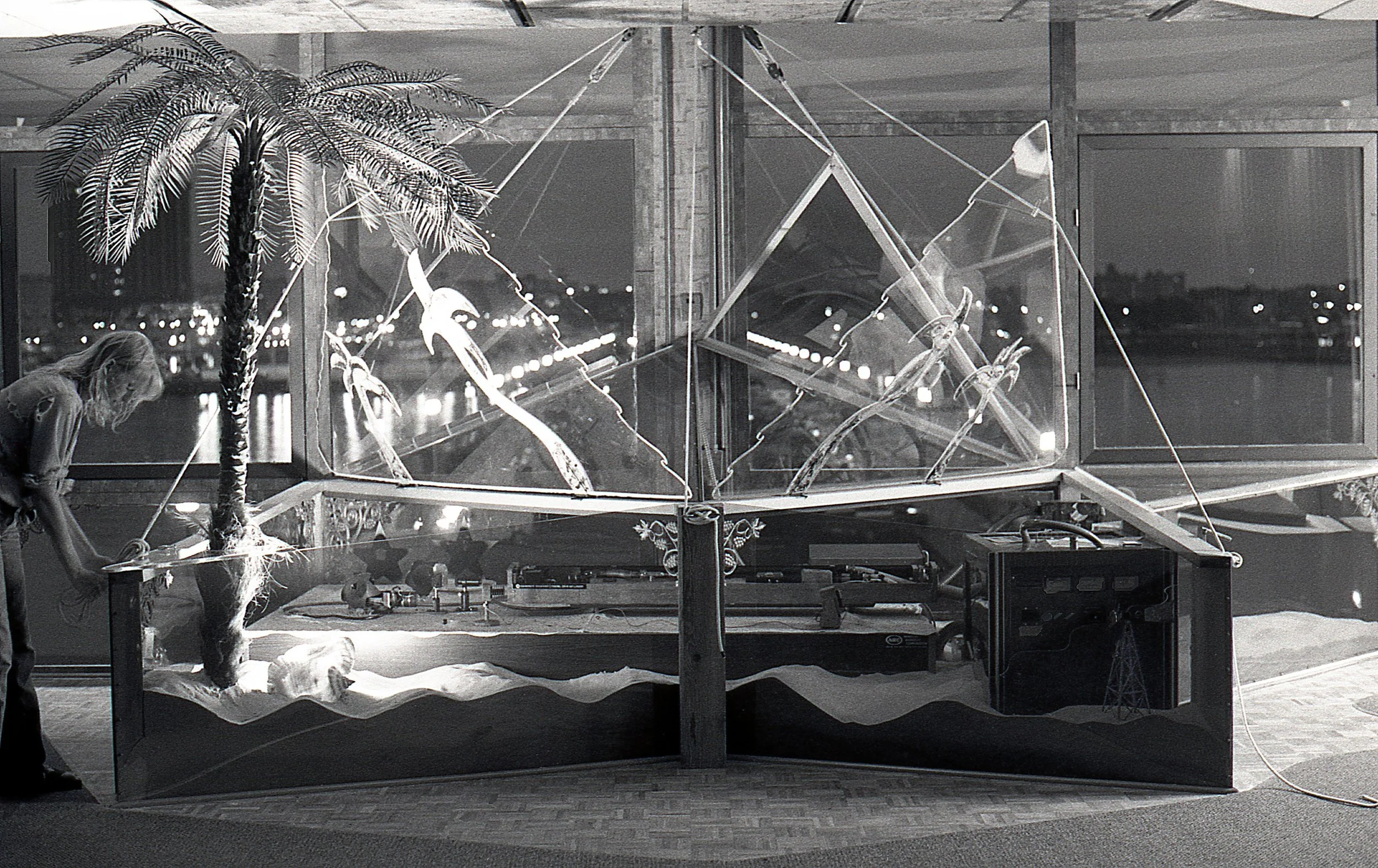
The Star Board installation was part of a national series Krebs called “Home on the Range.” (St. Pete’s was subtitled “Part VI.”) He had decorated it with beach sand, a tiny palm tree, a plastic flamingo and other Sunshine State ephemera.
When The Laser was working, said Anderson, it was “other worldly and the eighth wonder of the world. But when it was broken down, it was a curse.”
Until it was dismantled and removed in the mid ‘80s, it was barely operational.
Nevertheless, Anderson says, “I have always been thrilled to have been involved in that project, and to having been around Rockne. He was an extremely brilliant artist. And when you understand the processes of that installation, you see the genius.
“I sat down there with him and watched him doing some drawings and thinking things out. I wouldn’t have missed that for my life.” VINTAGE ST. PETE: The Pier and The Laser, Bill DeYoung, St. Pete Catalyst, 2022
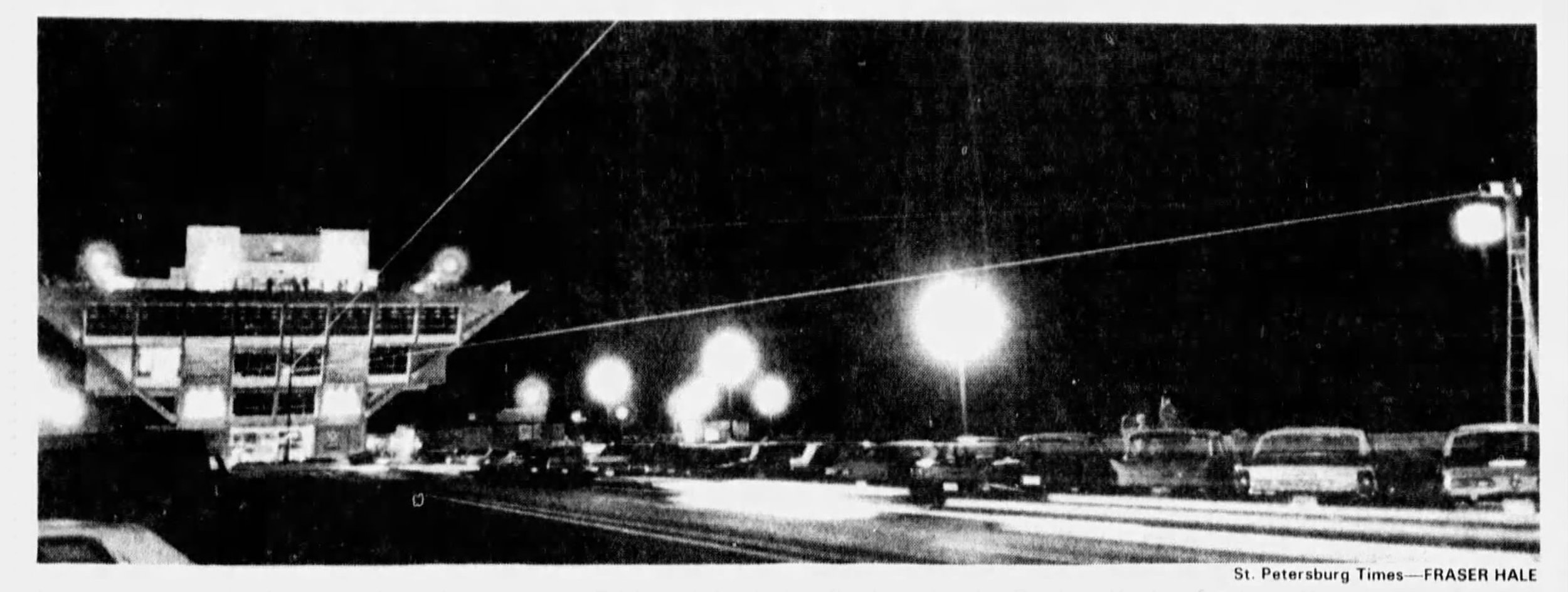
Glenn Anderson, former Director of the St. Petersburg Arts Commission, discusses Rockne Krebs’ public art installation,
The Laser and Starboard (Home on the Range, Part VI), 1975
in 2022 with Heather Krebs.
The Laser (Home on the Range, Part VI), 1975
And in Florida, that green flash in the early days was something that happened pretty much every day. What would happen as the sun would set in the west over the Gulf, it would get lower and lower and lower. And at the moment that the sun disappeared beneath the horizon, there would be this green flash. And I've never known anybody who said why that happened. It was a natural optical event. So that green flash was there. Glenn Anderson, 2022, transcript
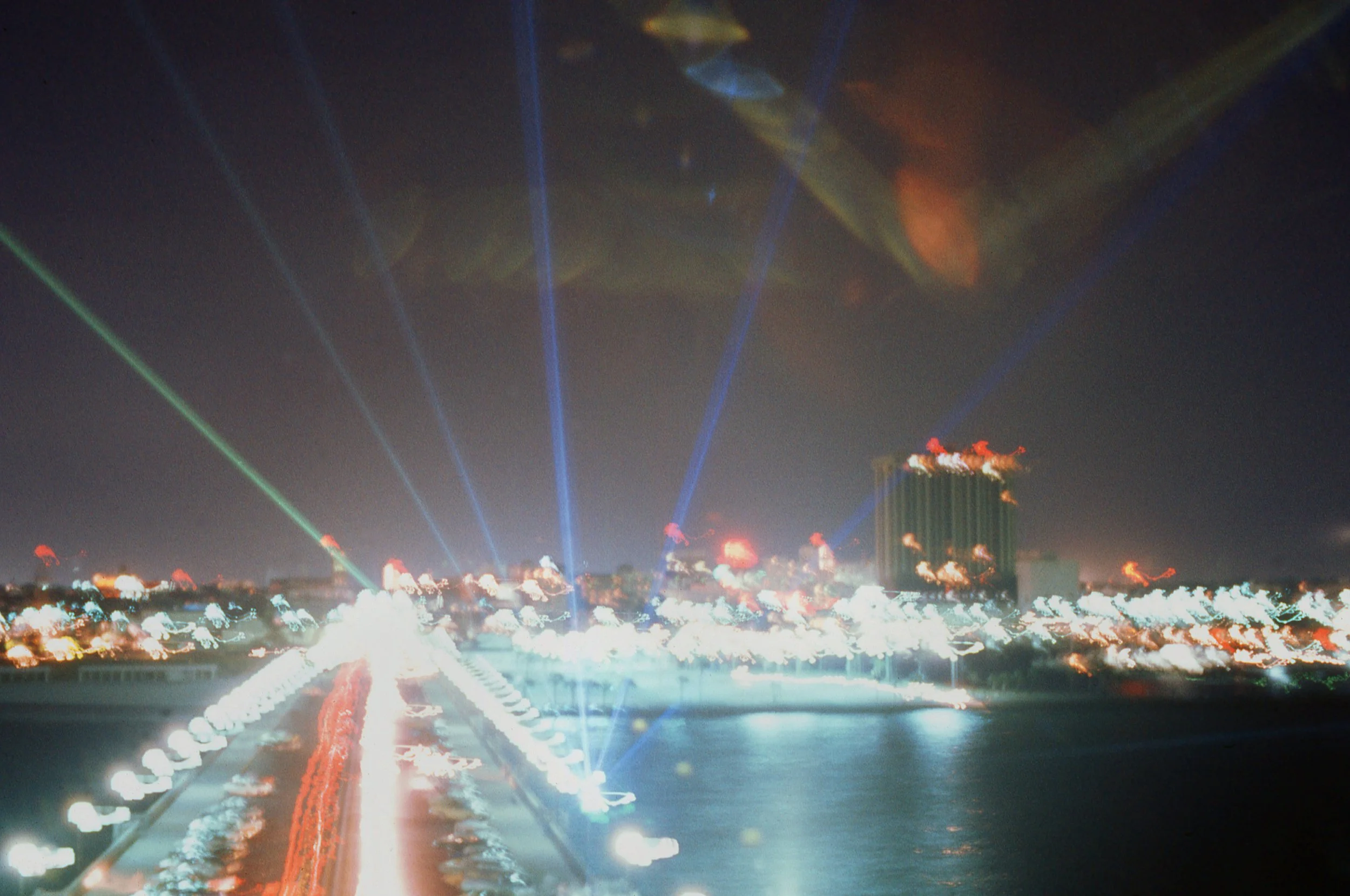
"And there were mirrors up there, too. So, the diffraction grating by that time would have broken up that green beam into yellow, purple, and blue, as well as the green, as individual beams move through to yellow, purple and blue." Glenn Anderson, February 5, 2022
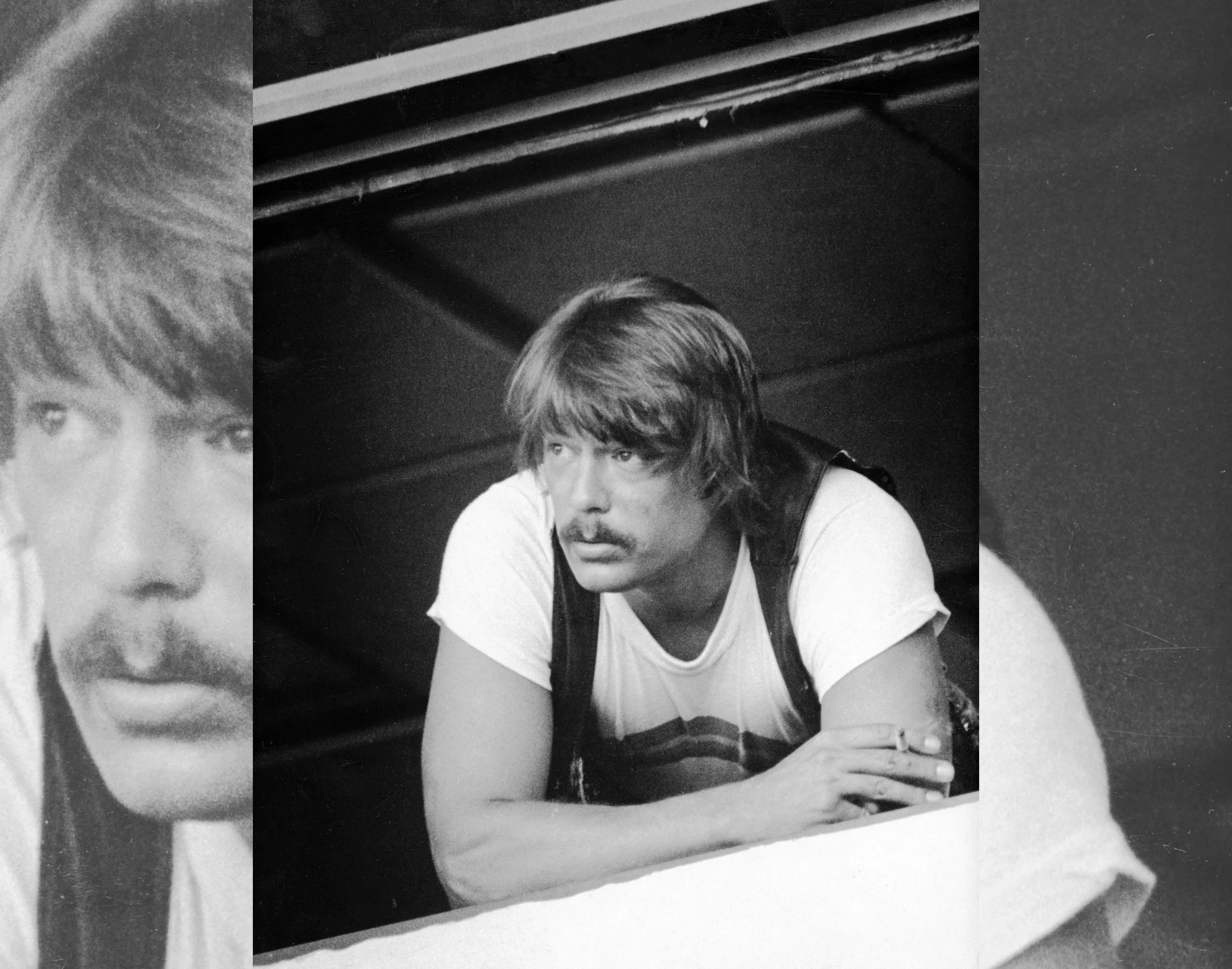
Photograph by Bill Tyjewski
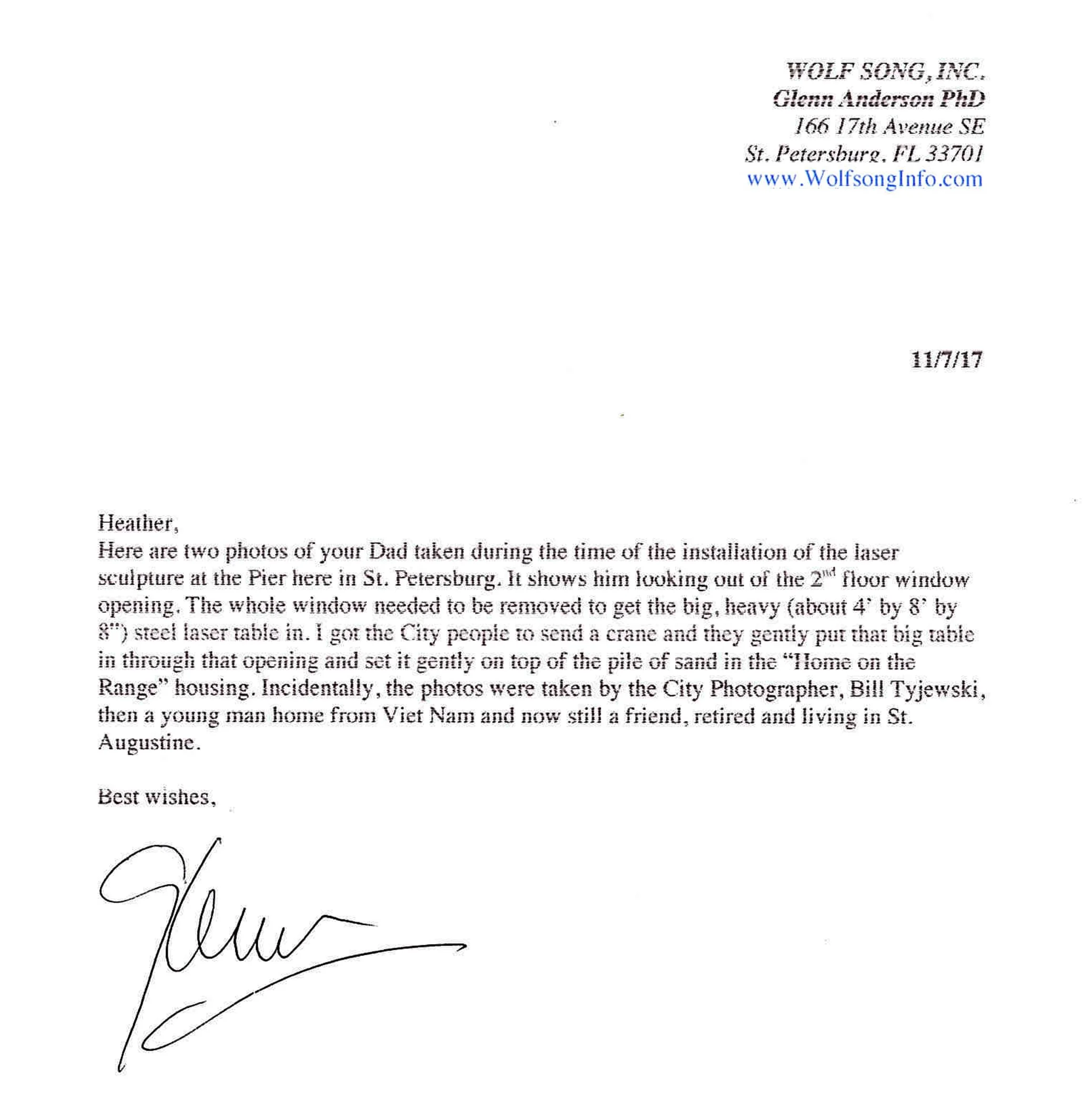
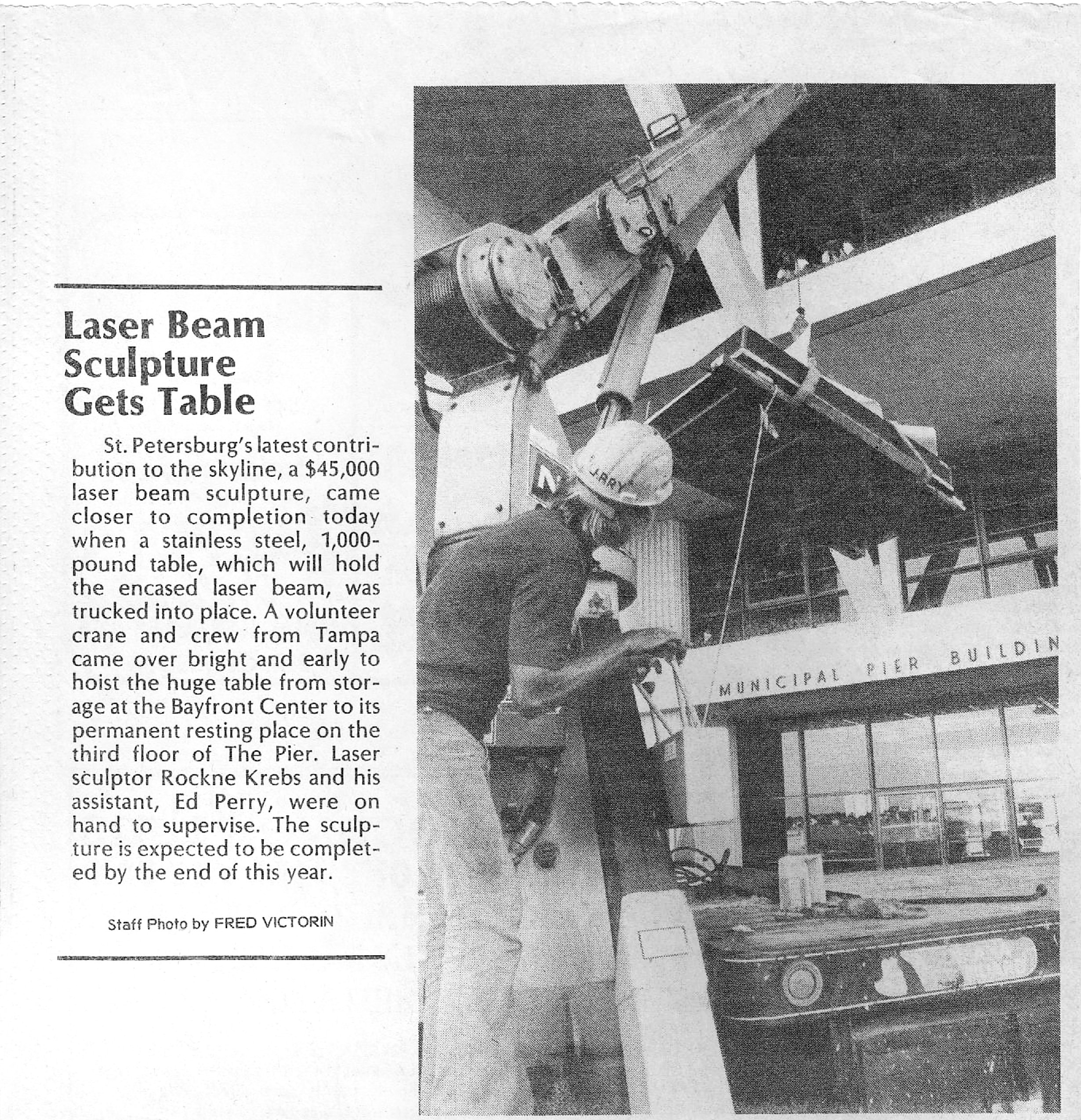
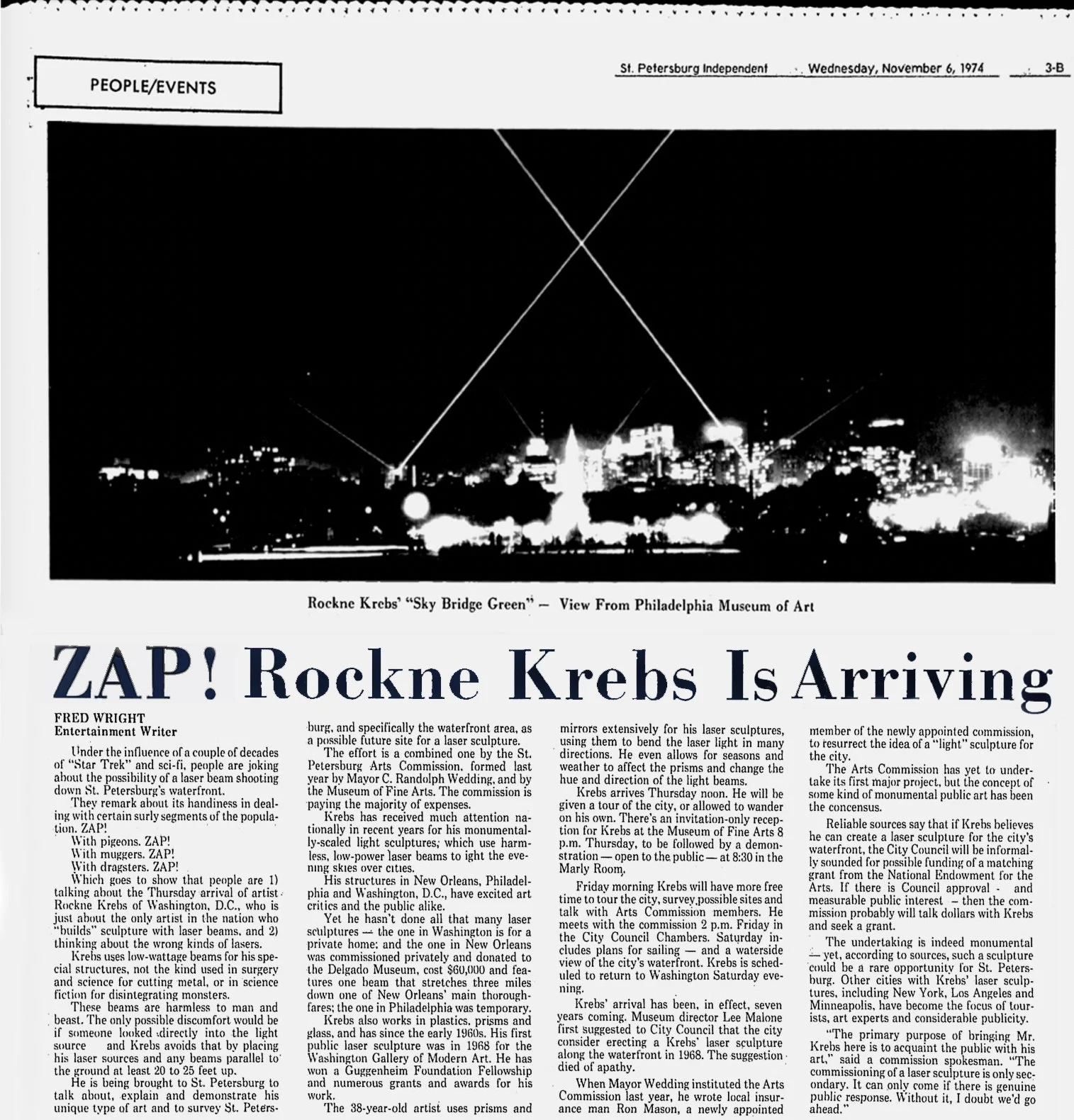
St. Petersburg Independent, 1975
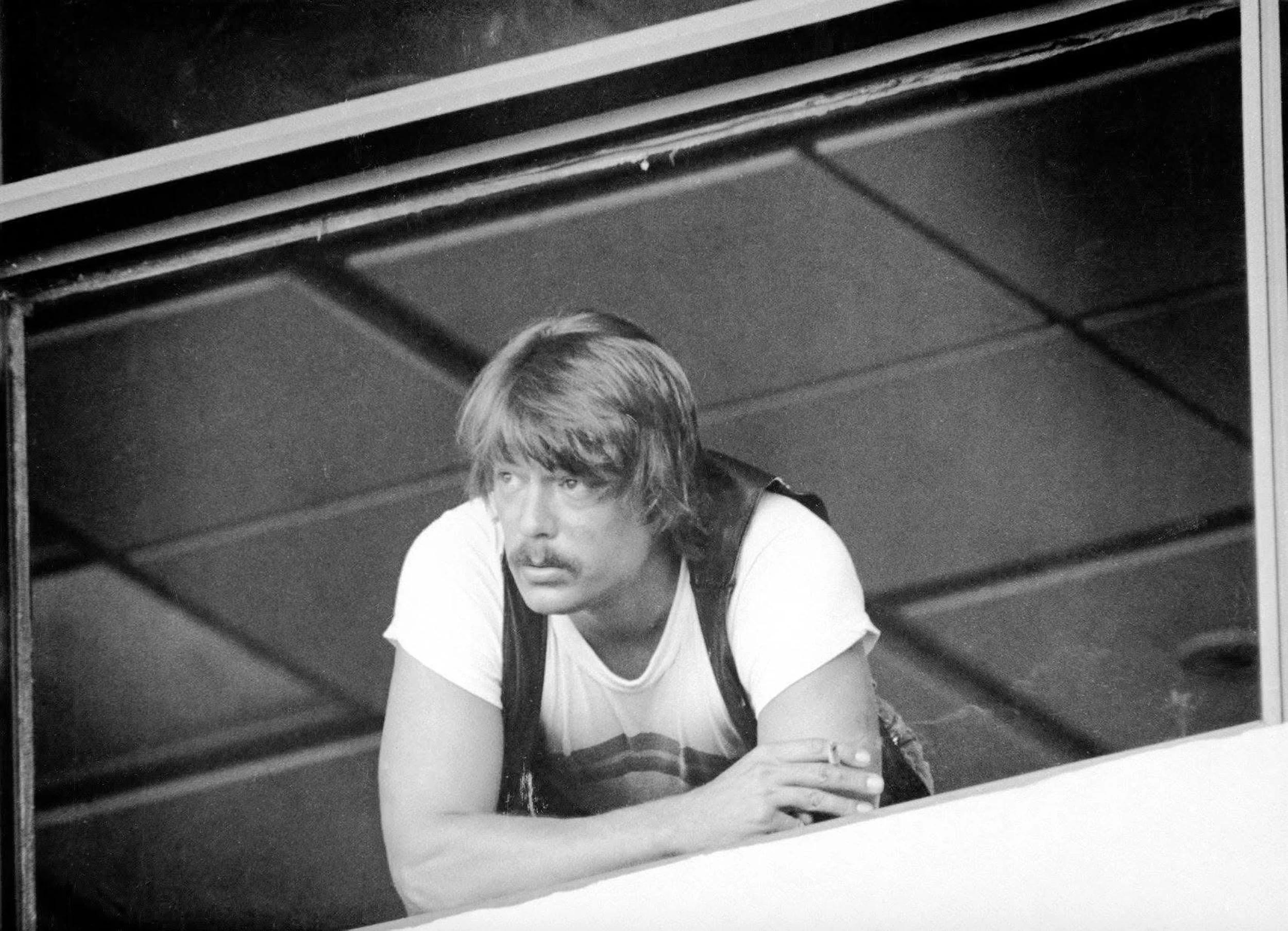
Rockne Krebs, 1975, St. Petersburg, FL. during the installation of his laser sculpture on The Pier. Photo by Bill Tyjewski of Rockne as he watches as a 1,000-pound steel laser table is lifted through the window.
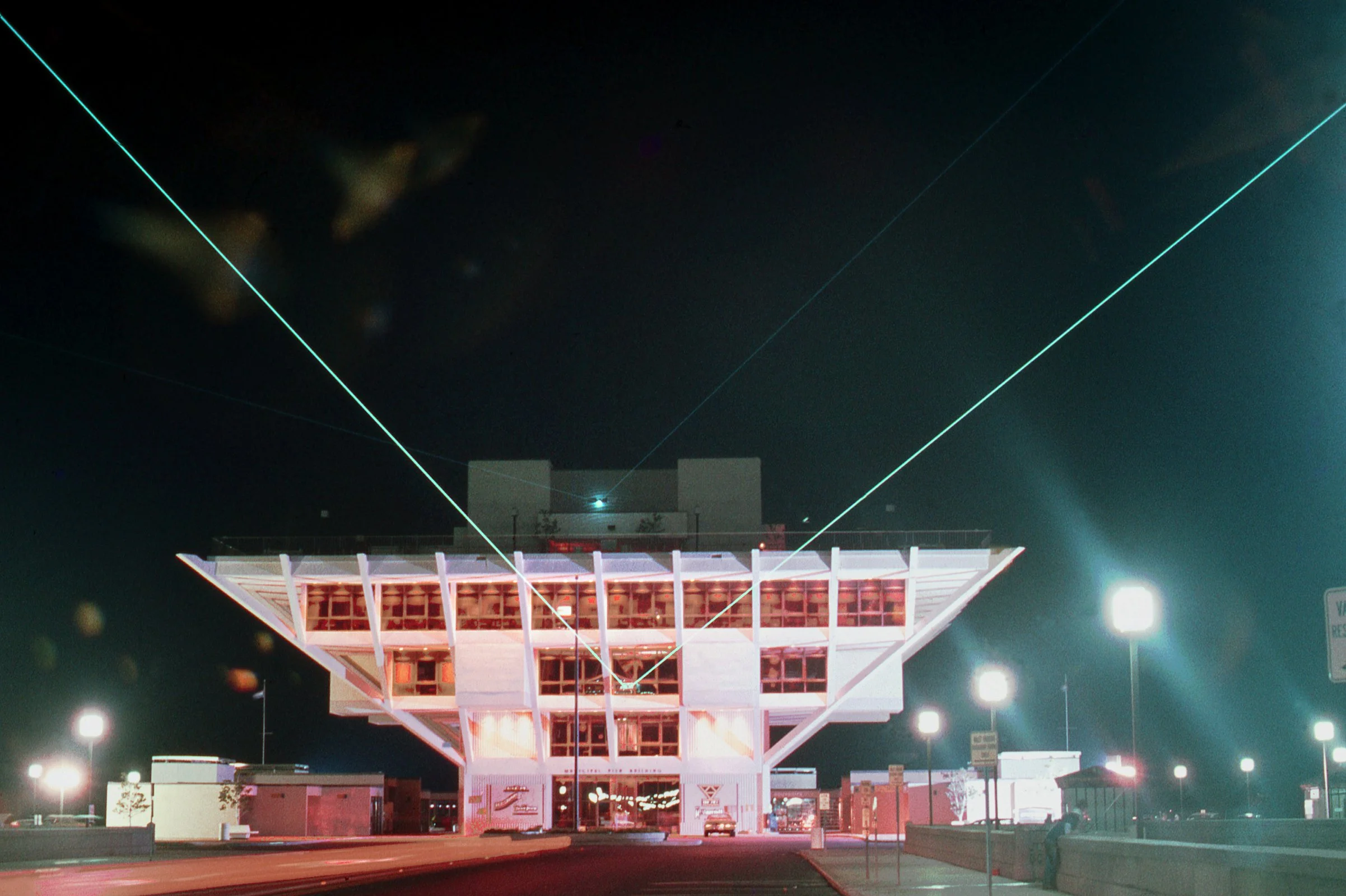
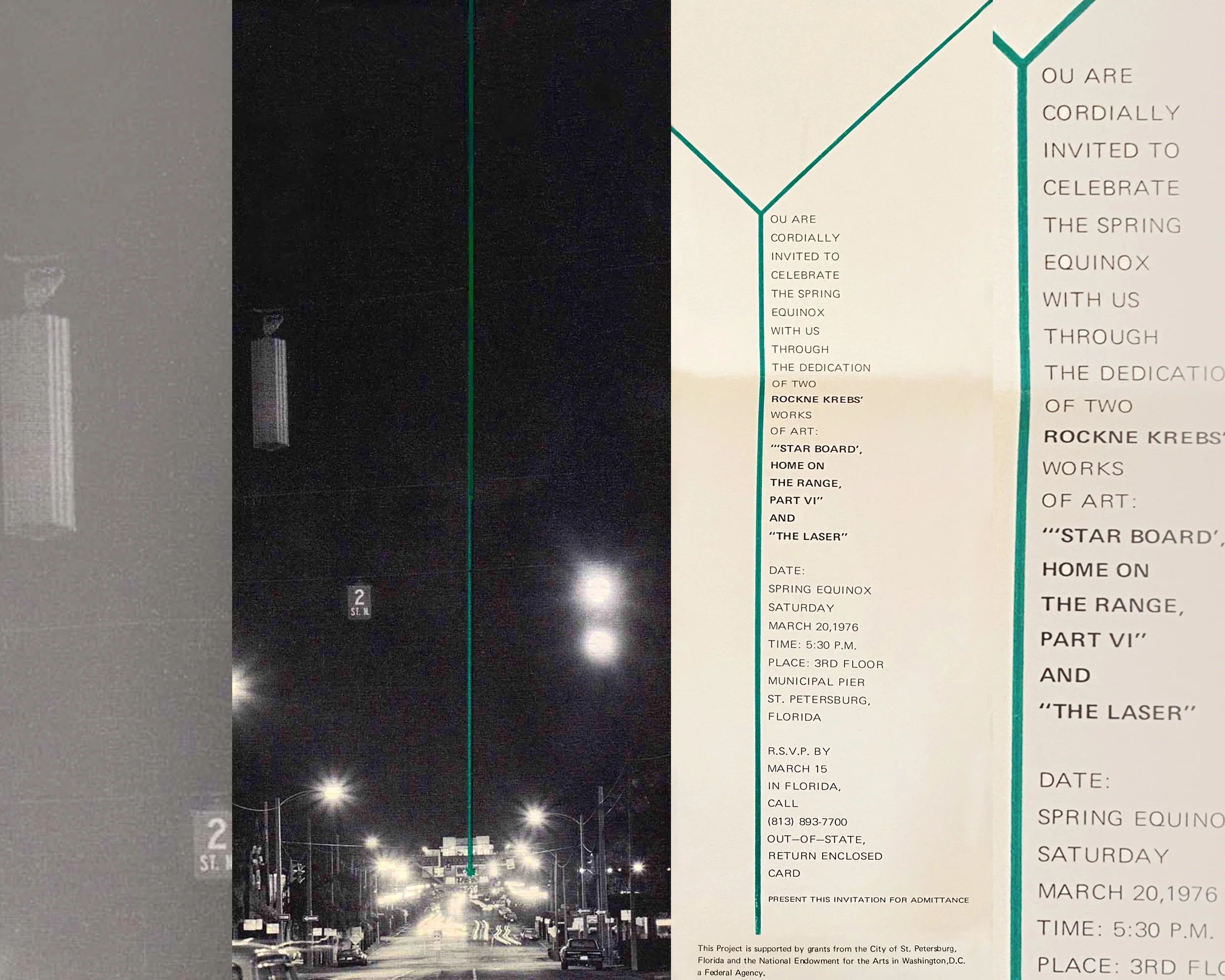
But also, if you remember the opening was on the Equinox, the spring Equinox. And on that day, the sun would actually set right down Second Avenue. In other words, if you looked at the Pier, you saw that Second Avenue and Second Avenue ran all the way out to the beach, and then the sun itself would come down and set between all the buildings and set right down on the street and then below the street. - Glenn Anderson, transcript
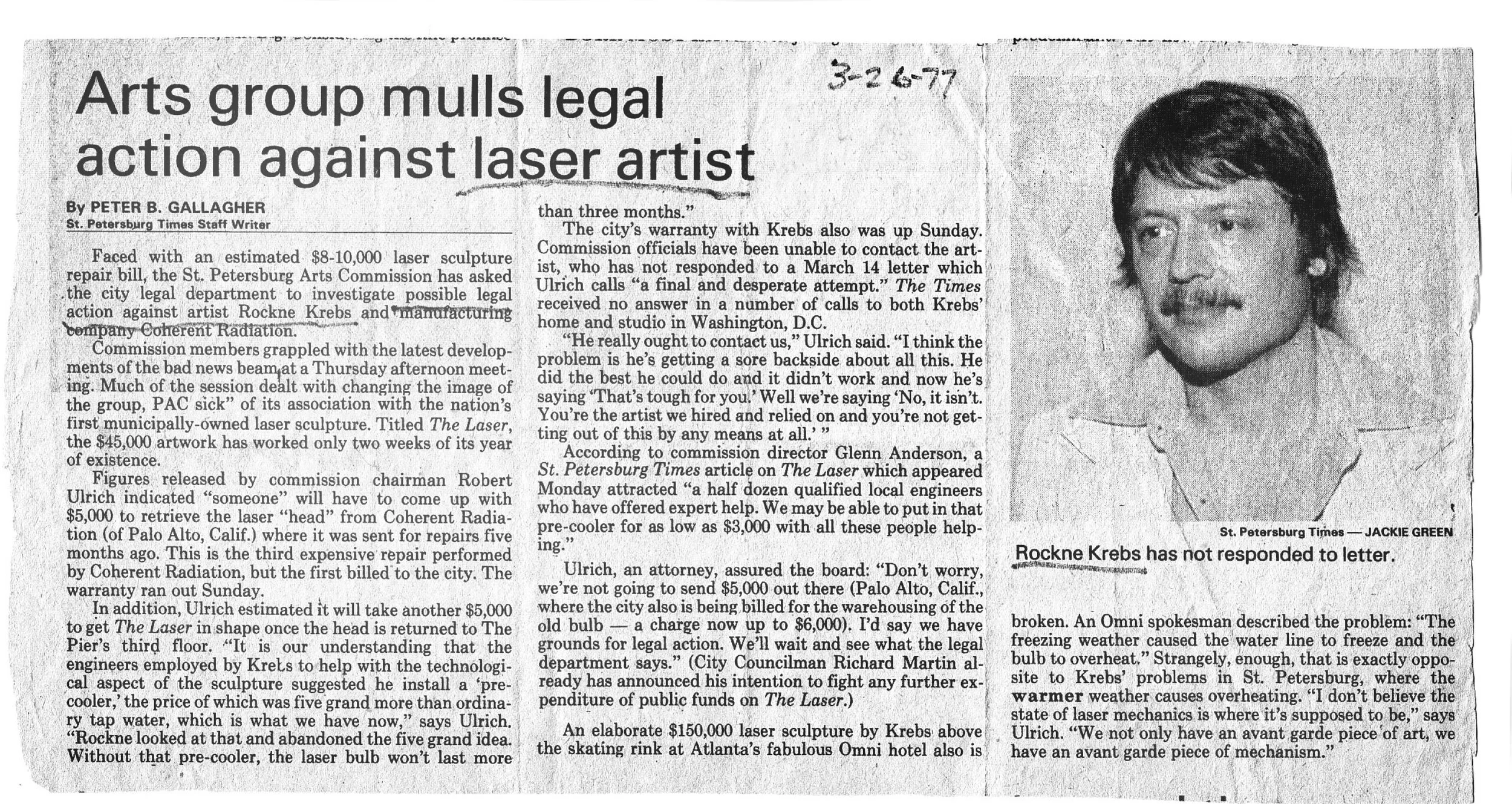
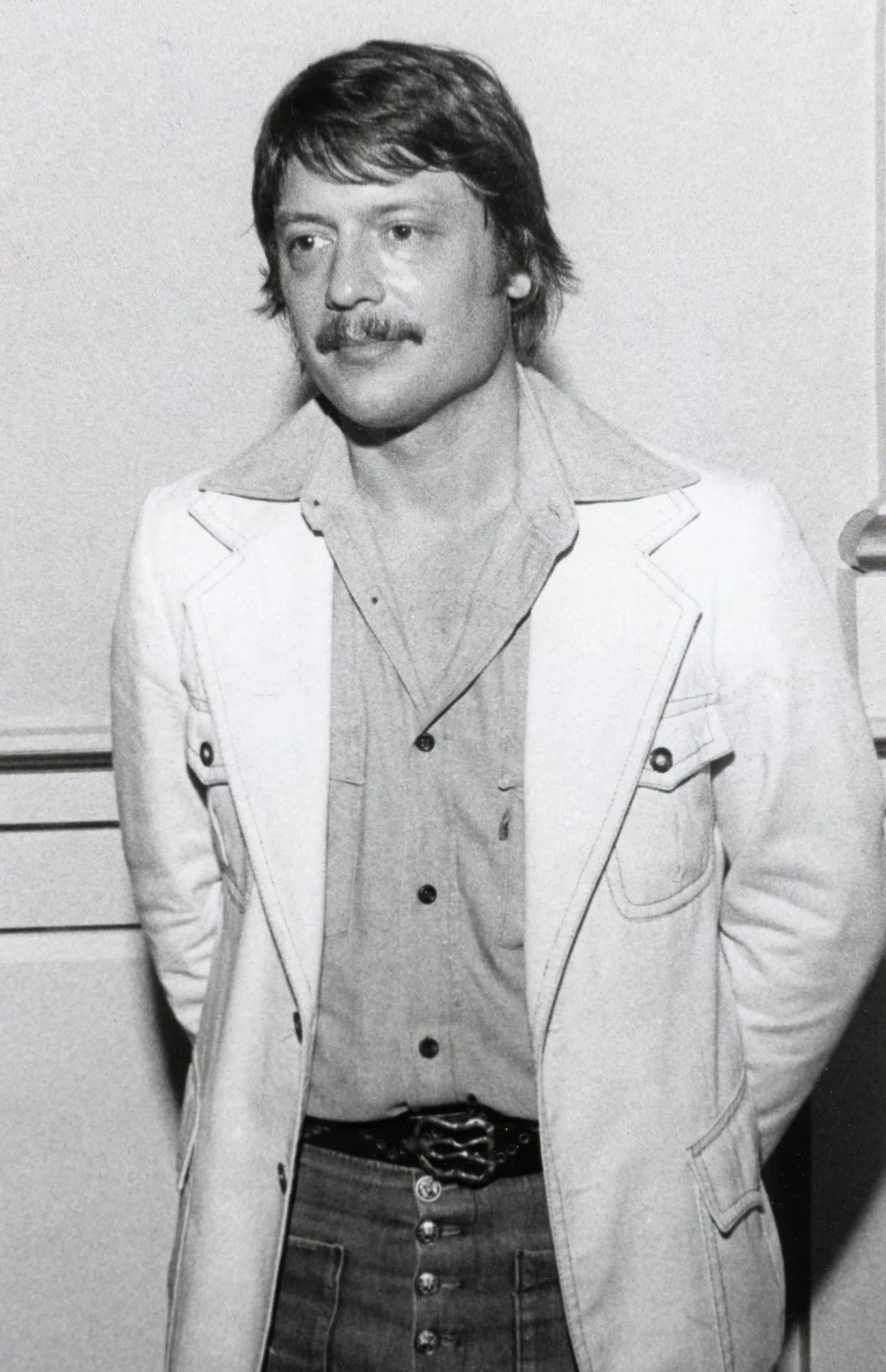
Photograph by Jackie Greene, St. Petersburg Times.
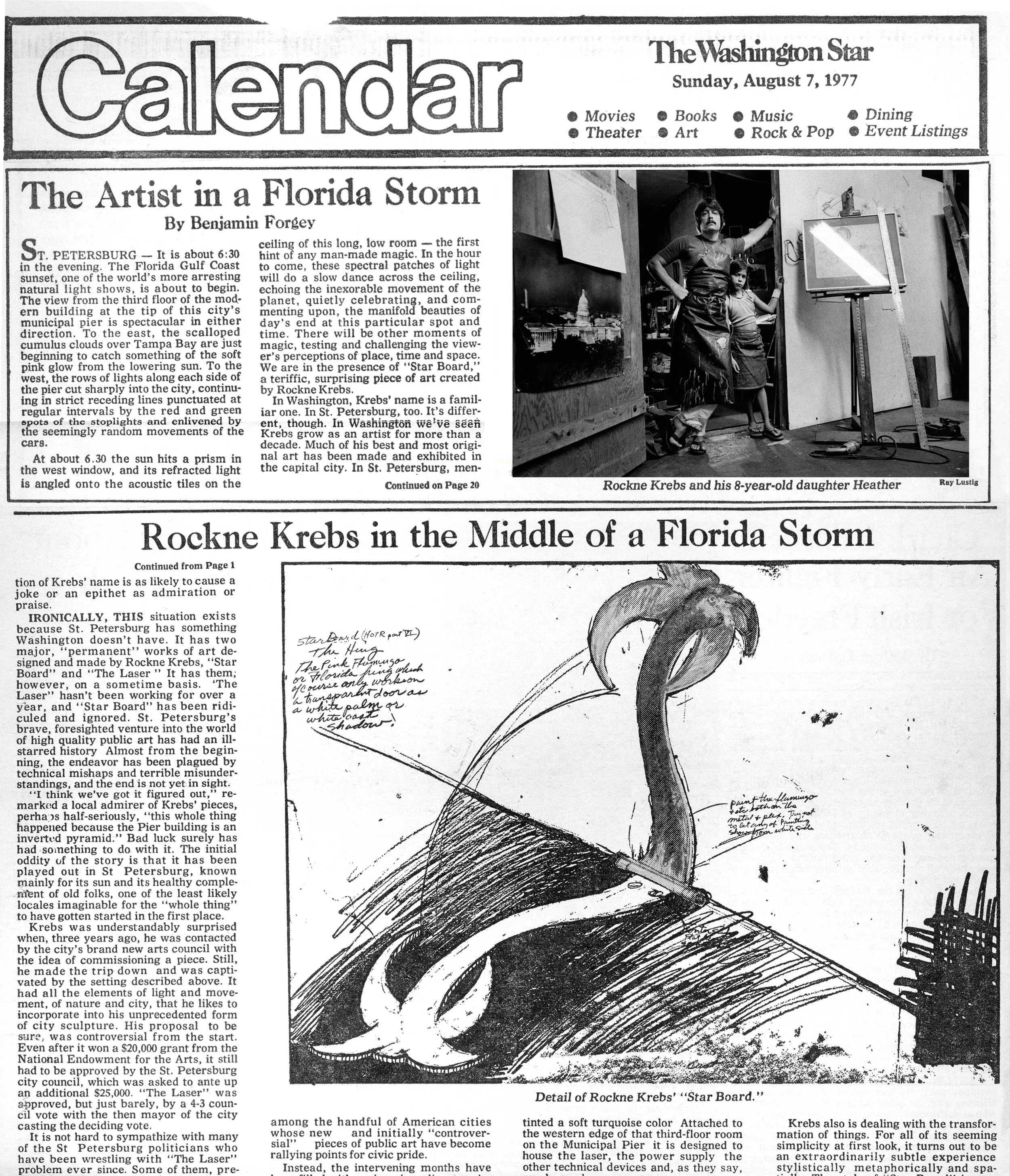
Benjamin Forgey, The Washington Star, August 7, 1977. The Artist in a Florida Storm, Rockne Krebs in the Middle of a Florida Storm, Calendar section p. 1 and pp. 20-21.
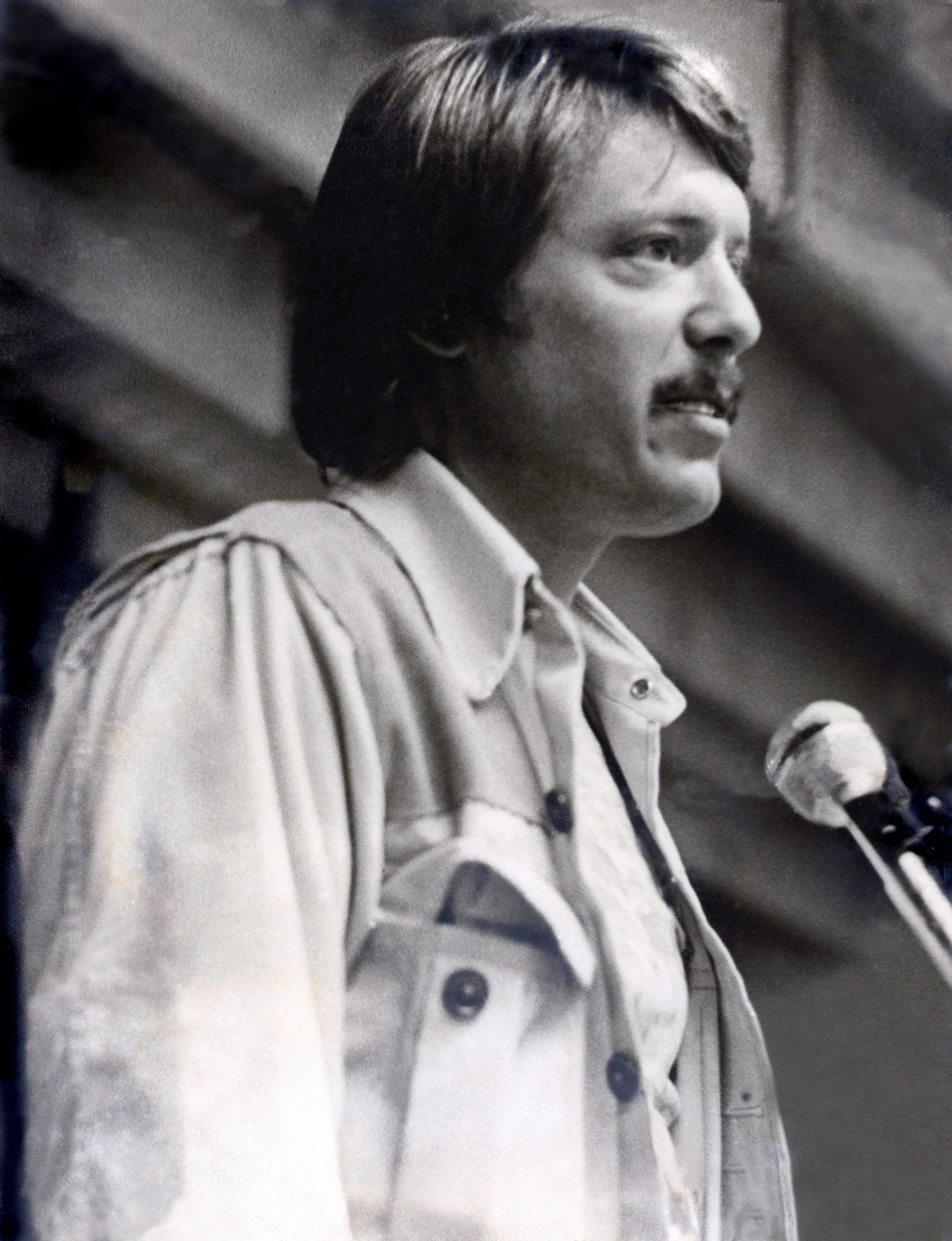
Photograph by Jackie Greene, St. Petersburg Times, 1976.
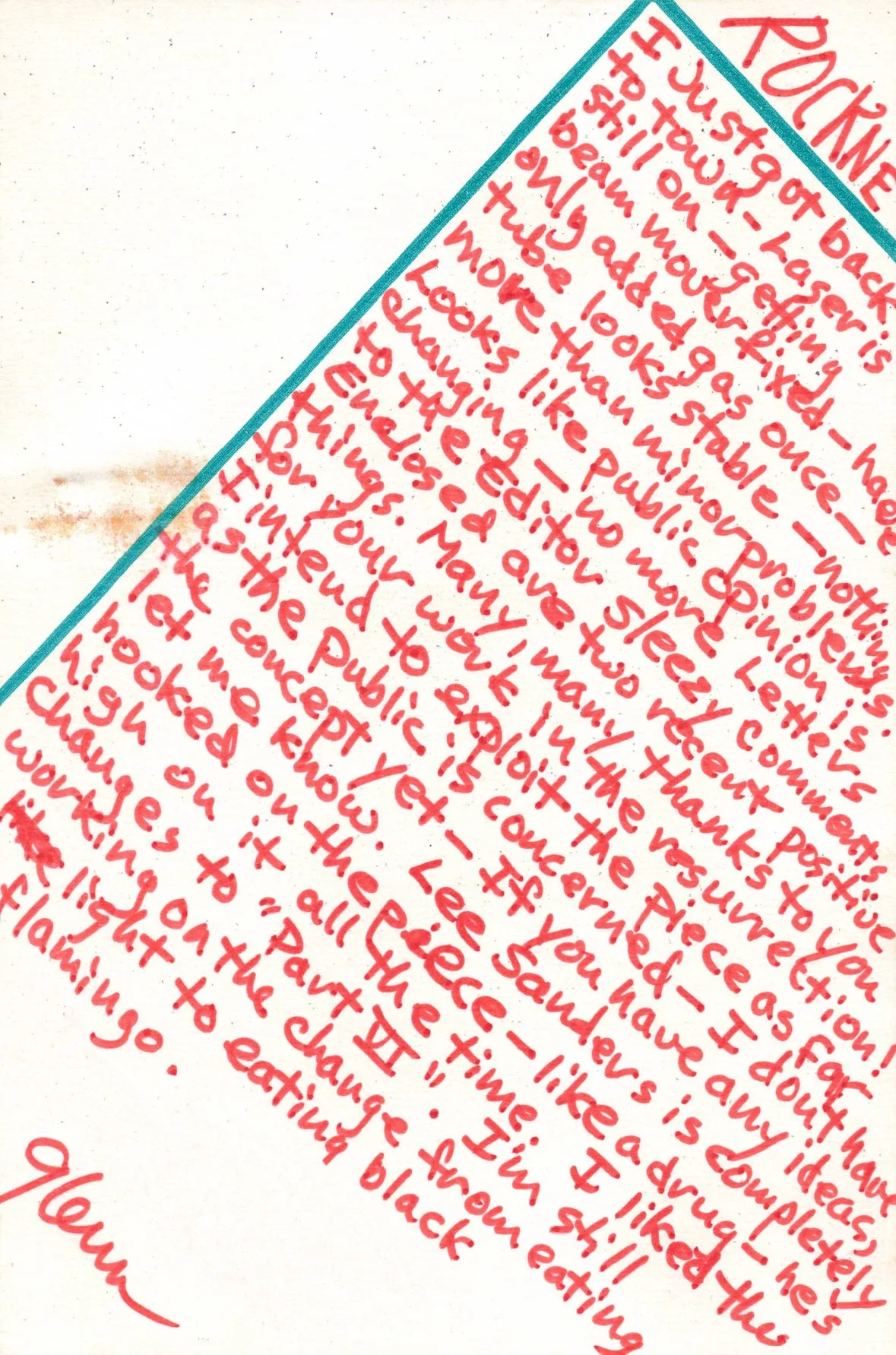
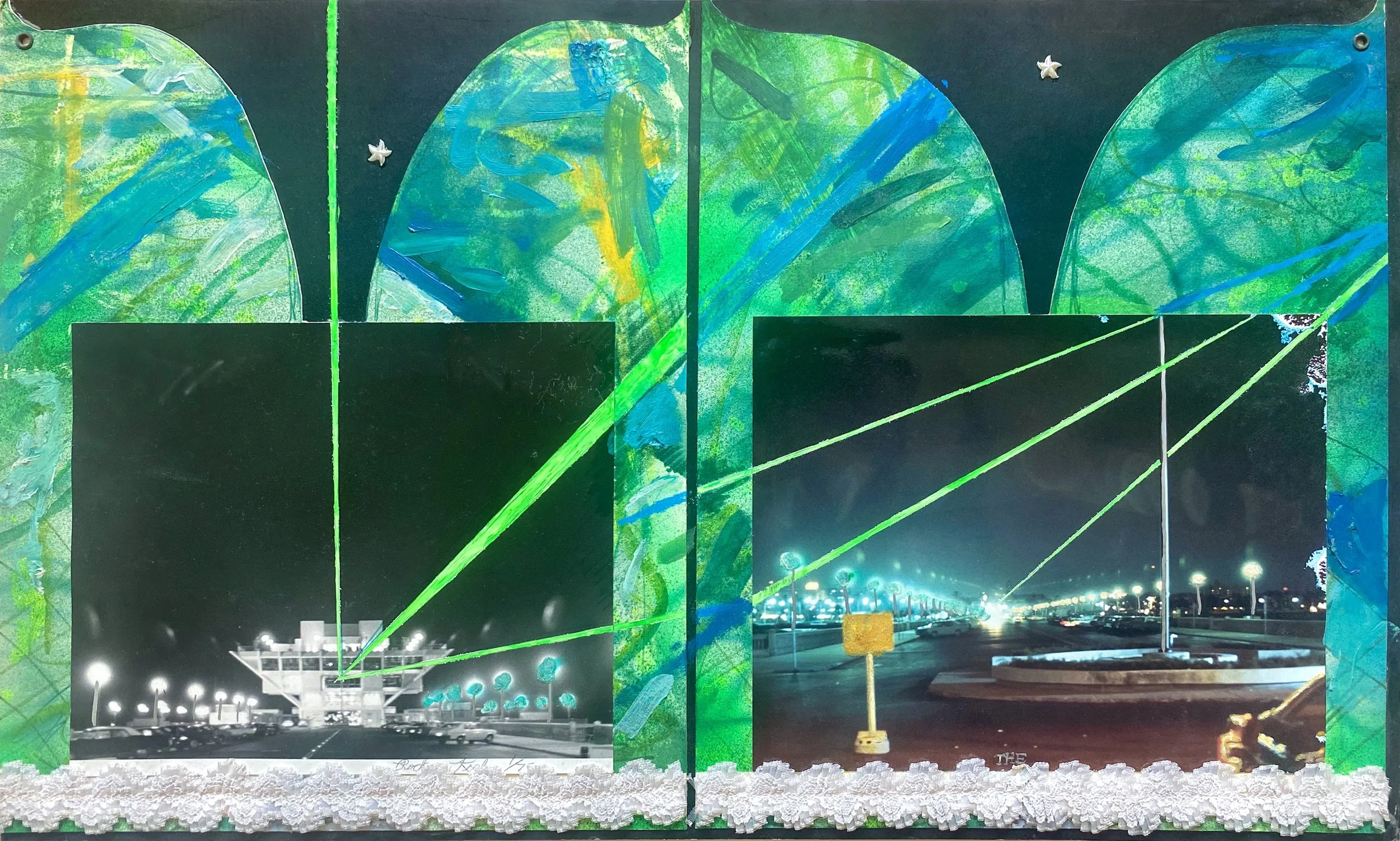
Untitled, St. Petersburg study #1, 1975
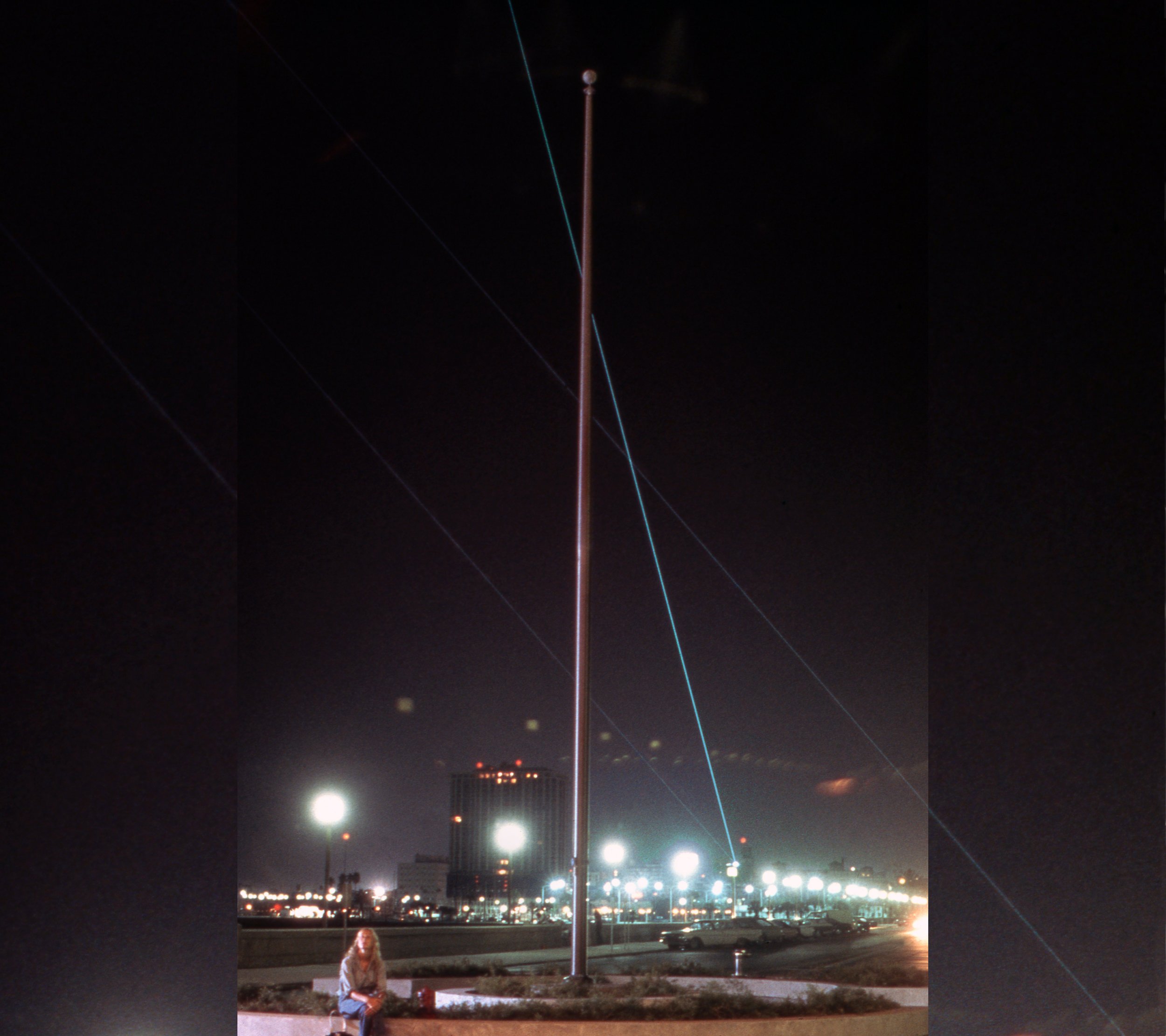
‘What emanates from it will be, in Krebs’ words, “a configuration of light that goes out over the city…about six different structures of light that result from this mechanism moving.”’ Jim Moorhead, St. Petersburg Independent, 1976, The Laser Beams In Officially at Sunset.
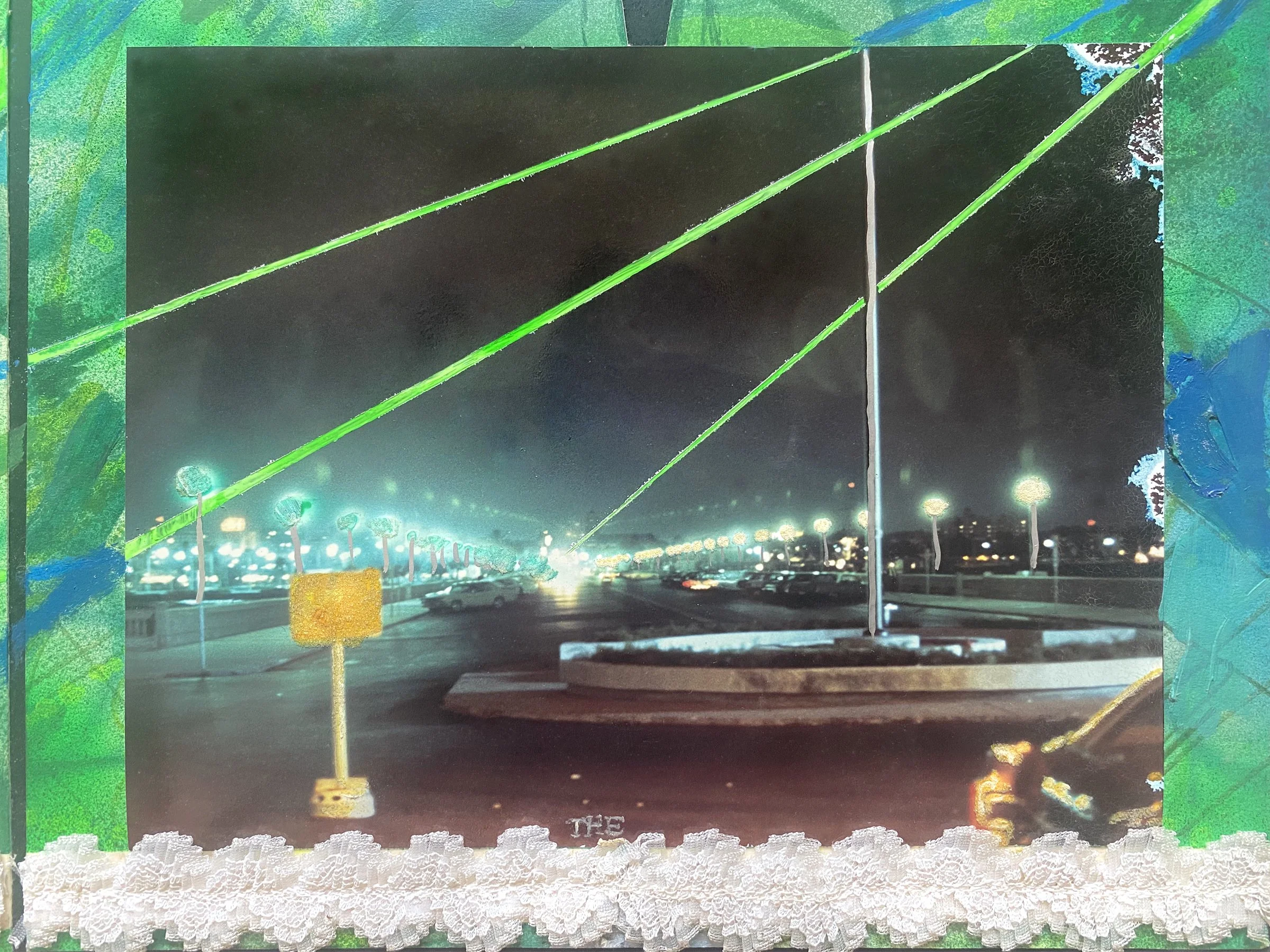
Untitled, St. Petersburg study #1 (detail), 1975
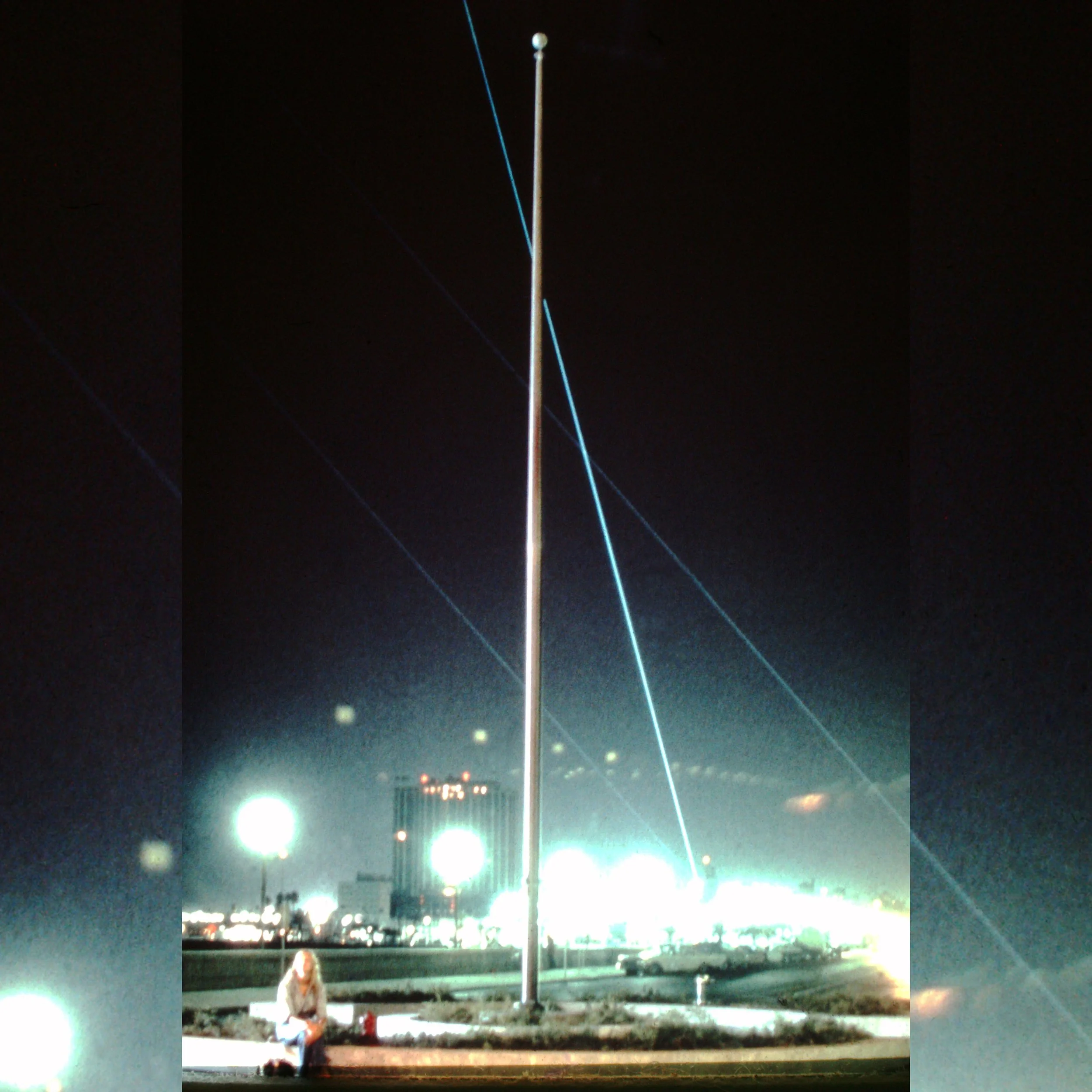
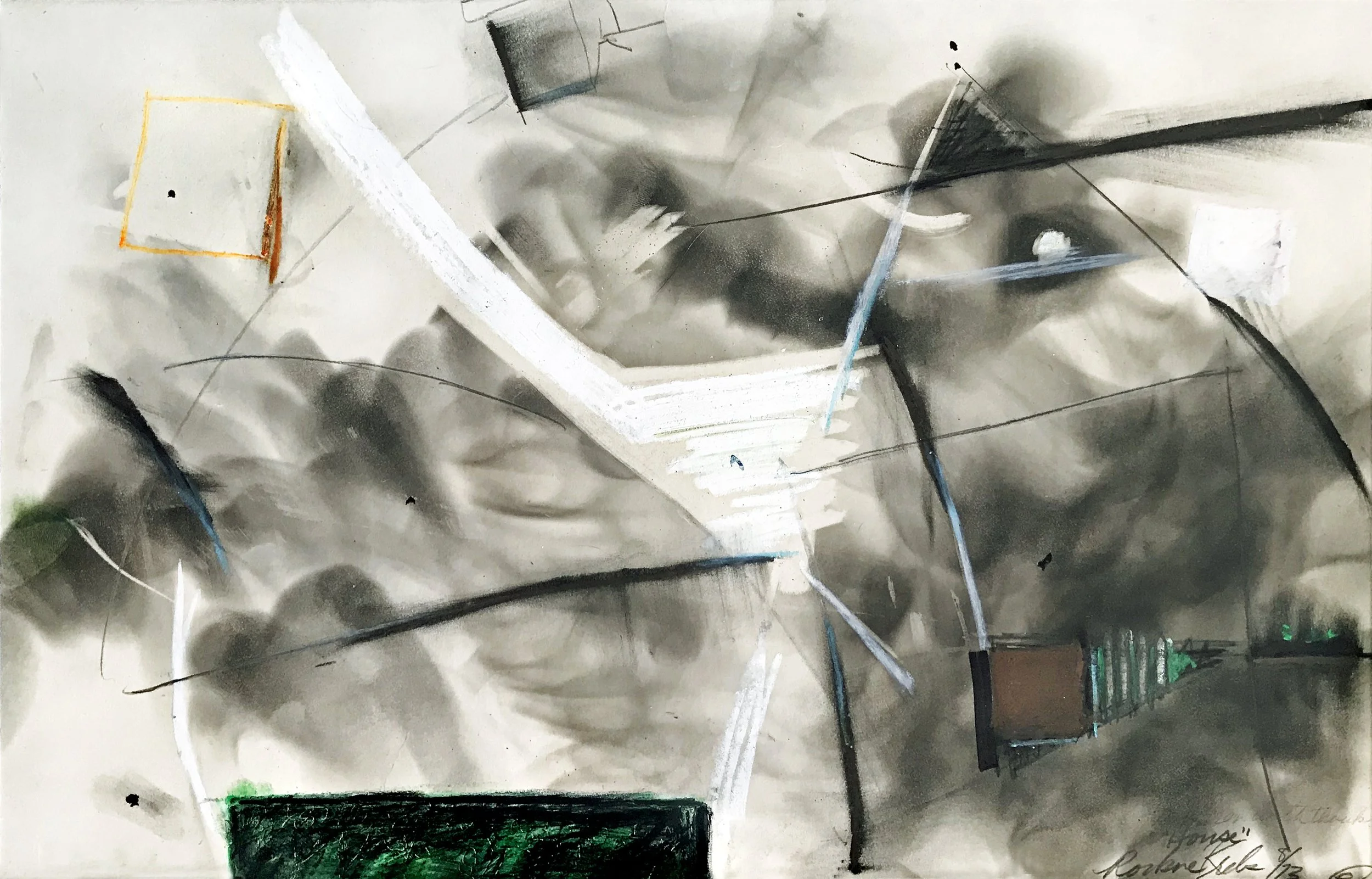
To Karen with thanks. "House" Rockne Krebs 8/73. A gift from Rockne to Karen Kievit, in appreciation of her assistance in drafting an NEA grant for the St. Petersburg, FL. piece, as well as for her hospitality in allowing him to stay at her house in St. Petersburg during his work there.
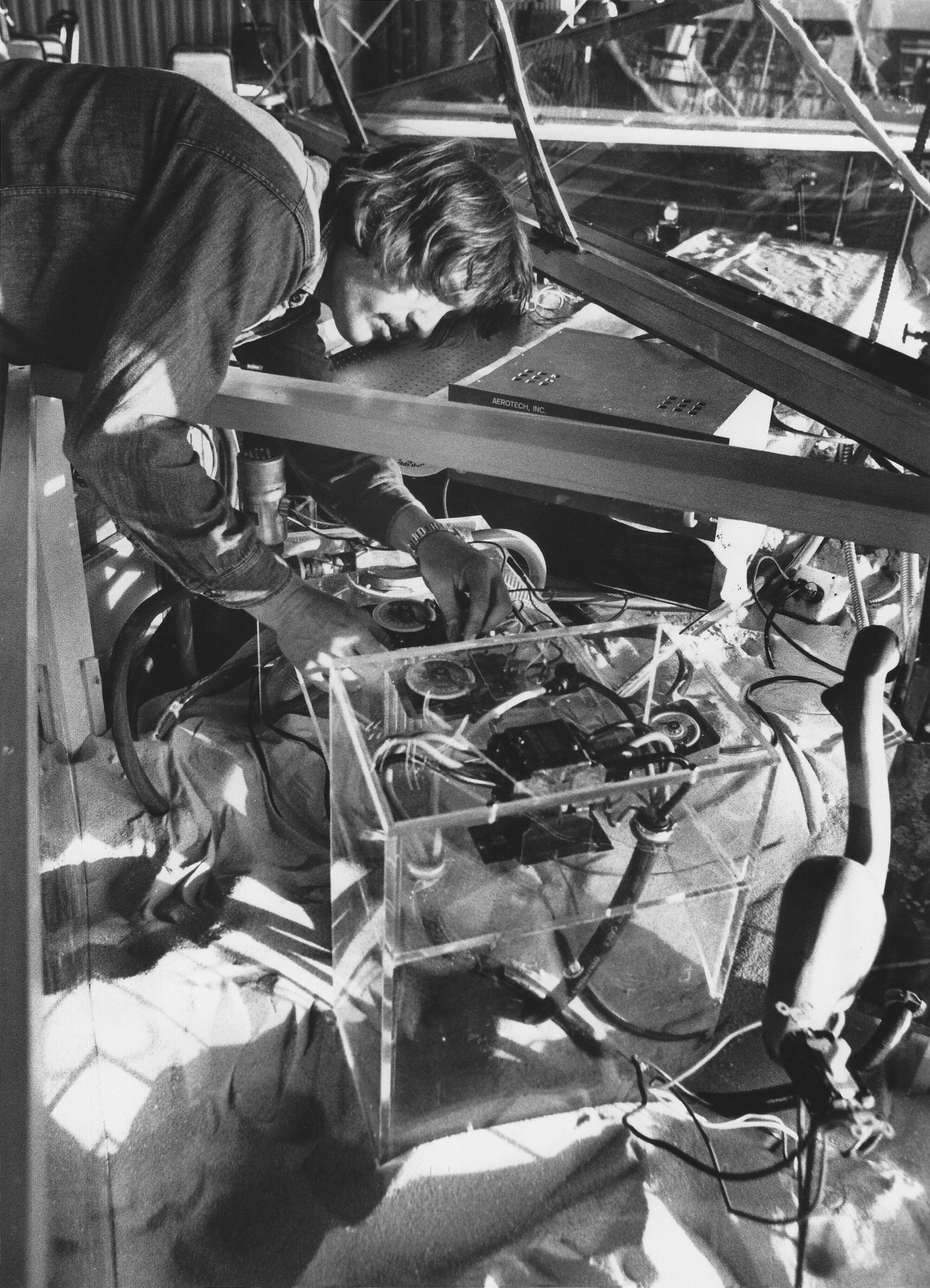
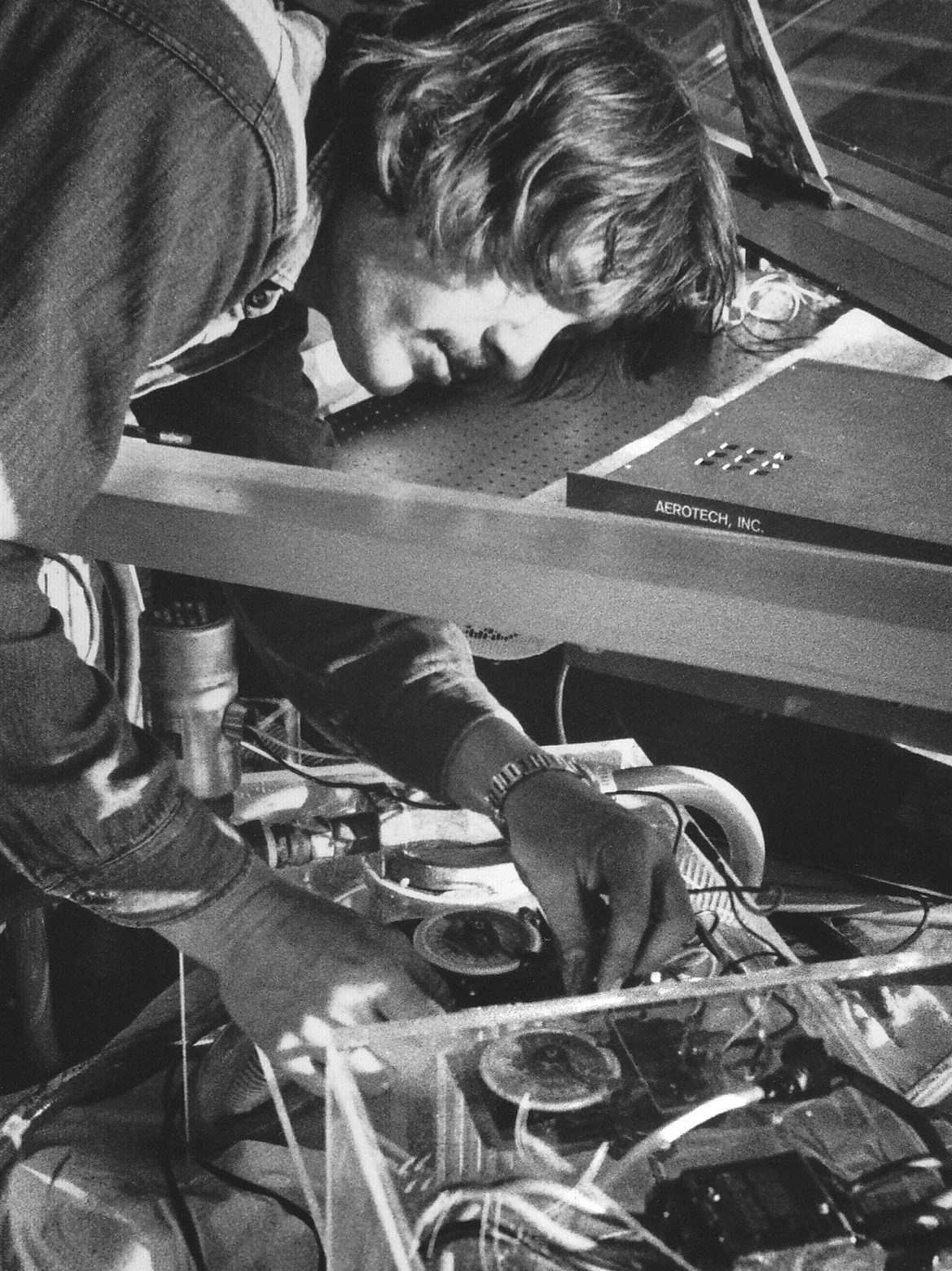
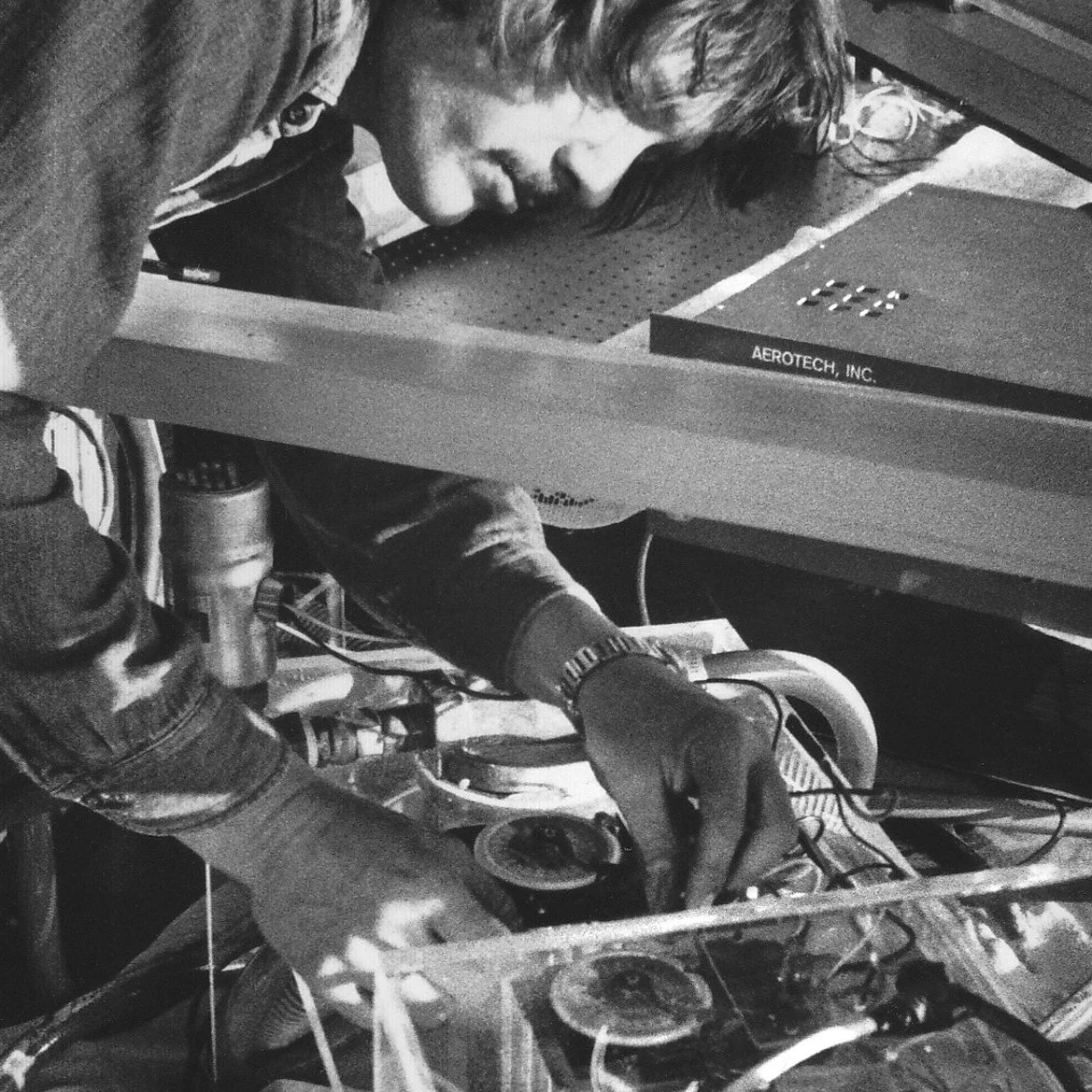
Photo by Weaver Tripp, St. Petersburg Times, 1976. Artist Rockne Krebs is leaning over his Plexiglas art installation piece, Starboard, Home on the Range, Part VI, he built to house the laser. Excerpts- “Krebs is setting prism timers and working on the laser that will project the intricate beams from off The Pier’s third floor…
A malfunction that sent St. Petersburg s new laser sculpture awry Tuesday night… A handful of thrill-seekers found out about it, started fooling with it… Here’s what happened with the $45,000 art creation by Krebs that, when on target, sends beams of bright lights shooting across the city’ s waterfront from The Pier.
A device called a beam mover, which moves the beam from The Pier to a reflecting mirror on the south side of the approach to The Pier, got a little rambunctious. It moved the beam a little too far in one direction, allowing part of the beam to miss the mirror and shoot across the seawall near the Senior Citizens Center. - Christopher Cubbison, St. Petersburg Times, Sculpture: Laser Beam, April 3, 1976
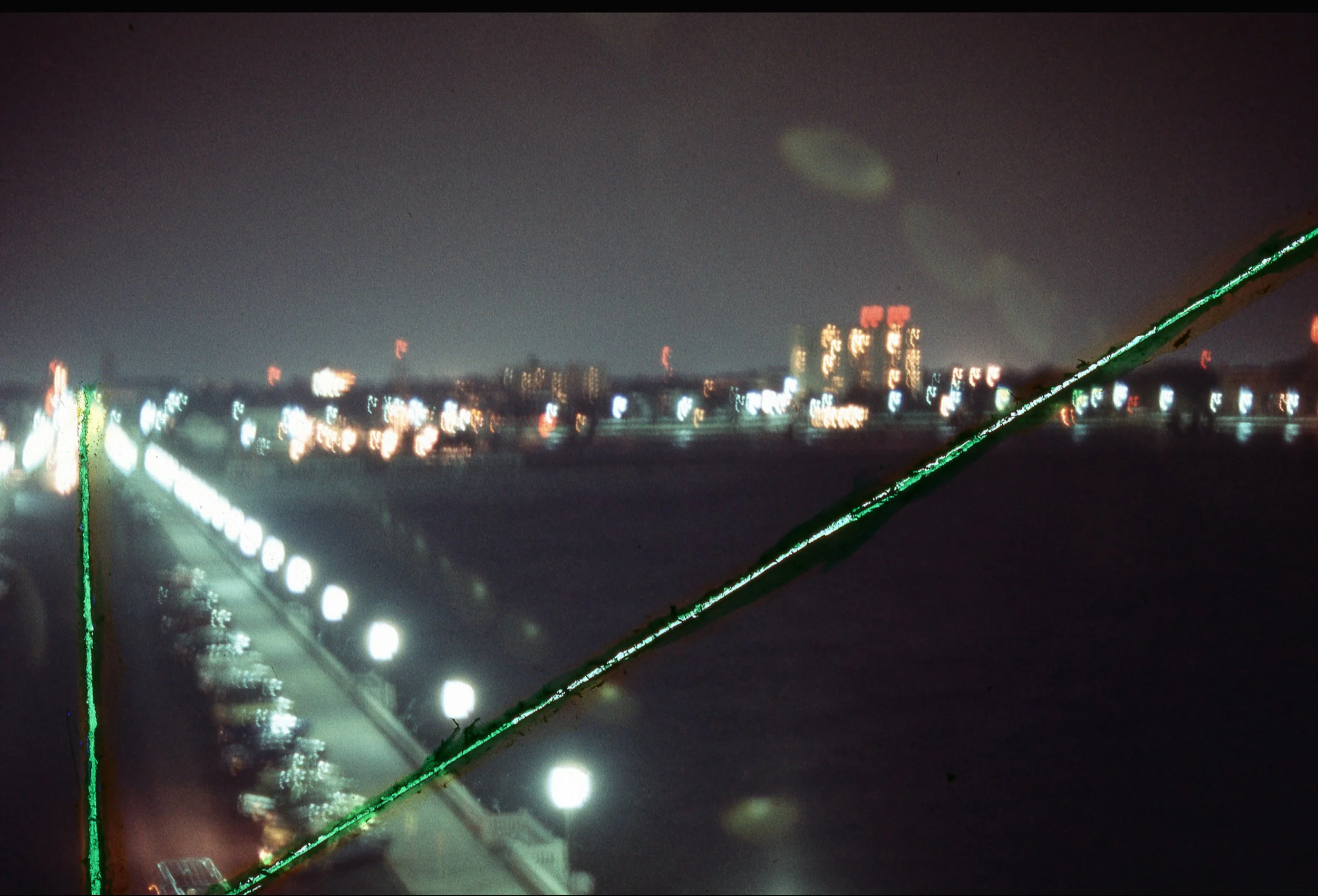
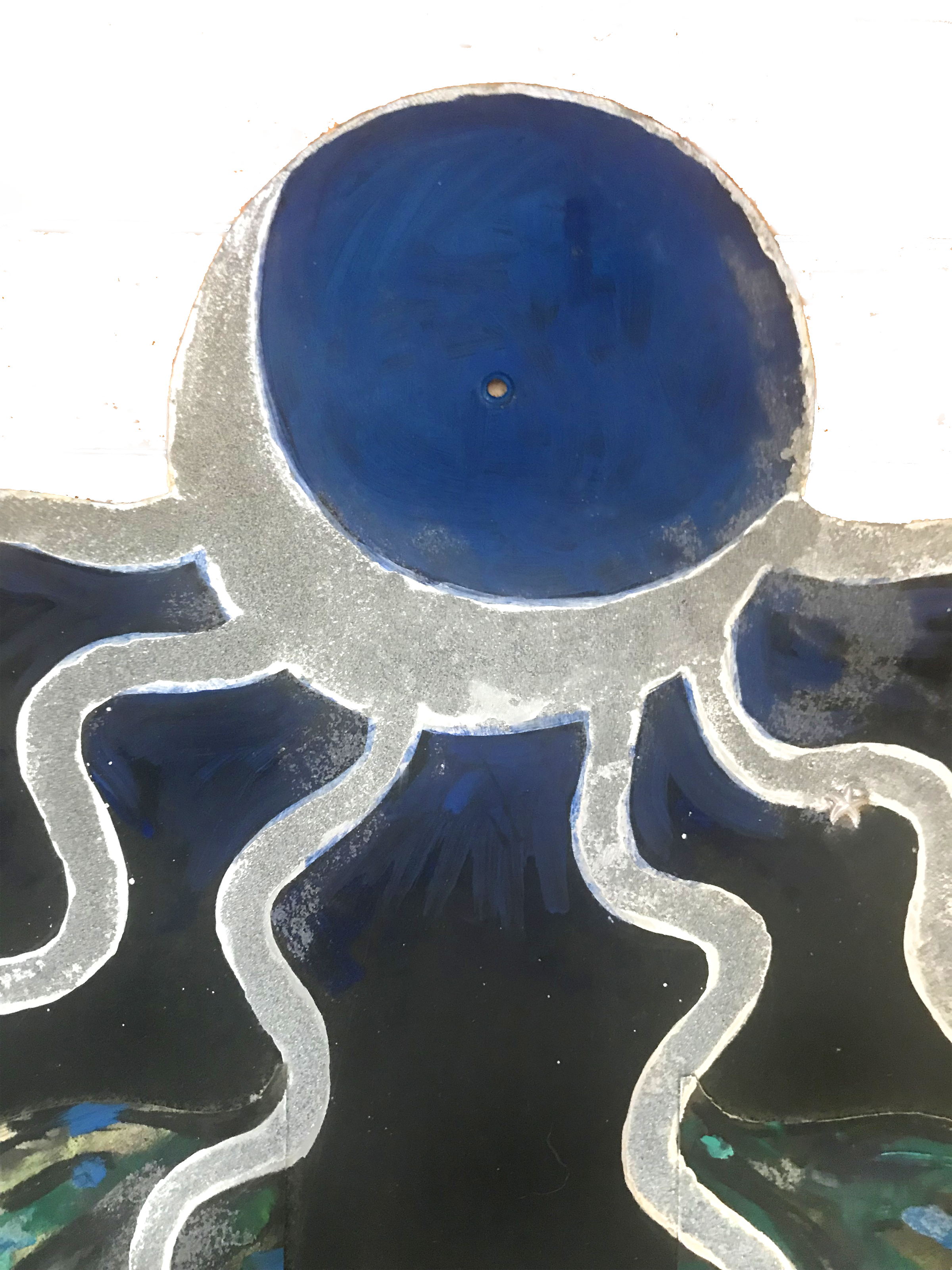
Untitled, St. Petersburg study #4 (detail), 1975
Starboard (Home on the Range, Part VI), 1975
This was one of Rockne’s most beautiful ideas. The lasers weren’t working when I visited the piece, back in the day, but I was able to spend some time with the Starboard part of it. Good-humored combination high art and low art and, not incidentally, truly mesmerizing. Benjamin F. Forgey, 2023
The building itself was sitting on pilings on the Bay. So when any sort of waves would hit the building and also the wind would do it, something with the tubes, there would be this slight movement...to make sure that the laser and the equipment that went with it was as stable as possible. And that's one of the reasons he used sand. Glenn Anderson, 2022
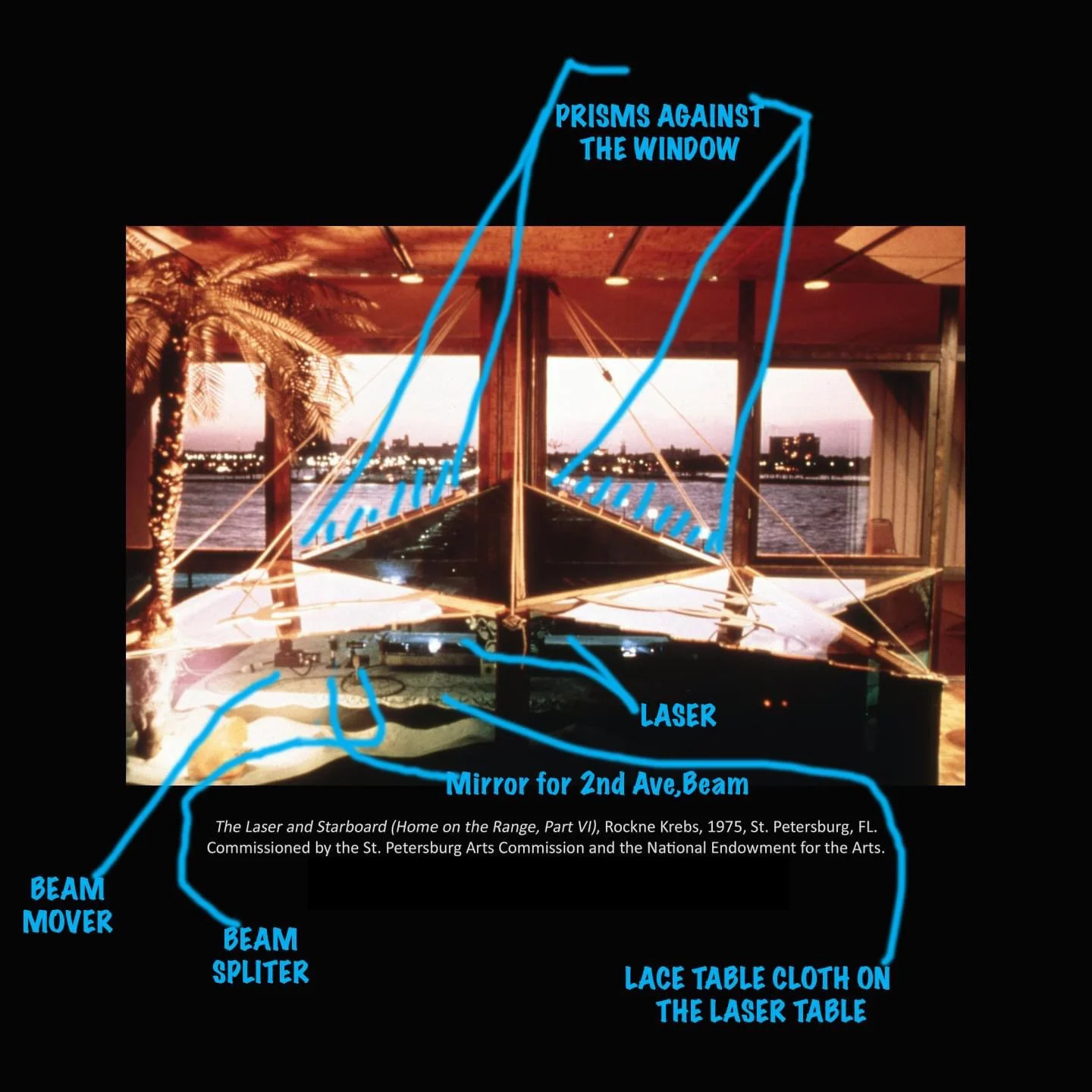
Diagram of Starboard by Glenn Anderson, 2022
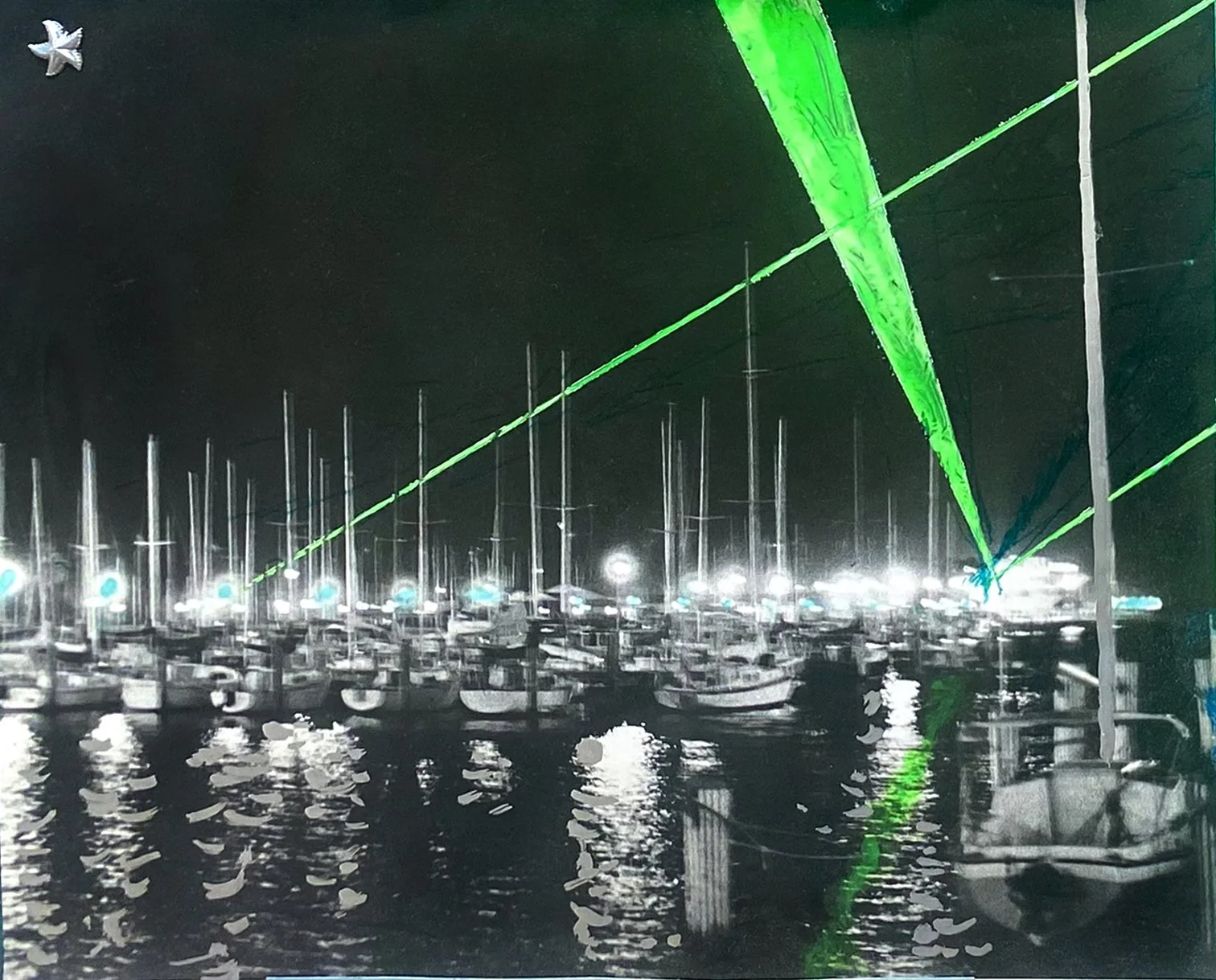
Untitled, St. Petersburg study #3 (detail), 1975
Untitled, St. Petersburg study #3 (detail), 1975
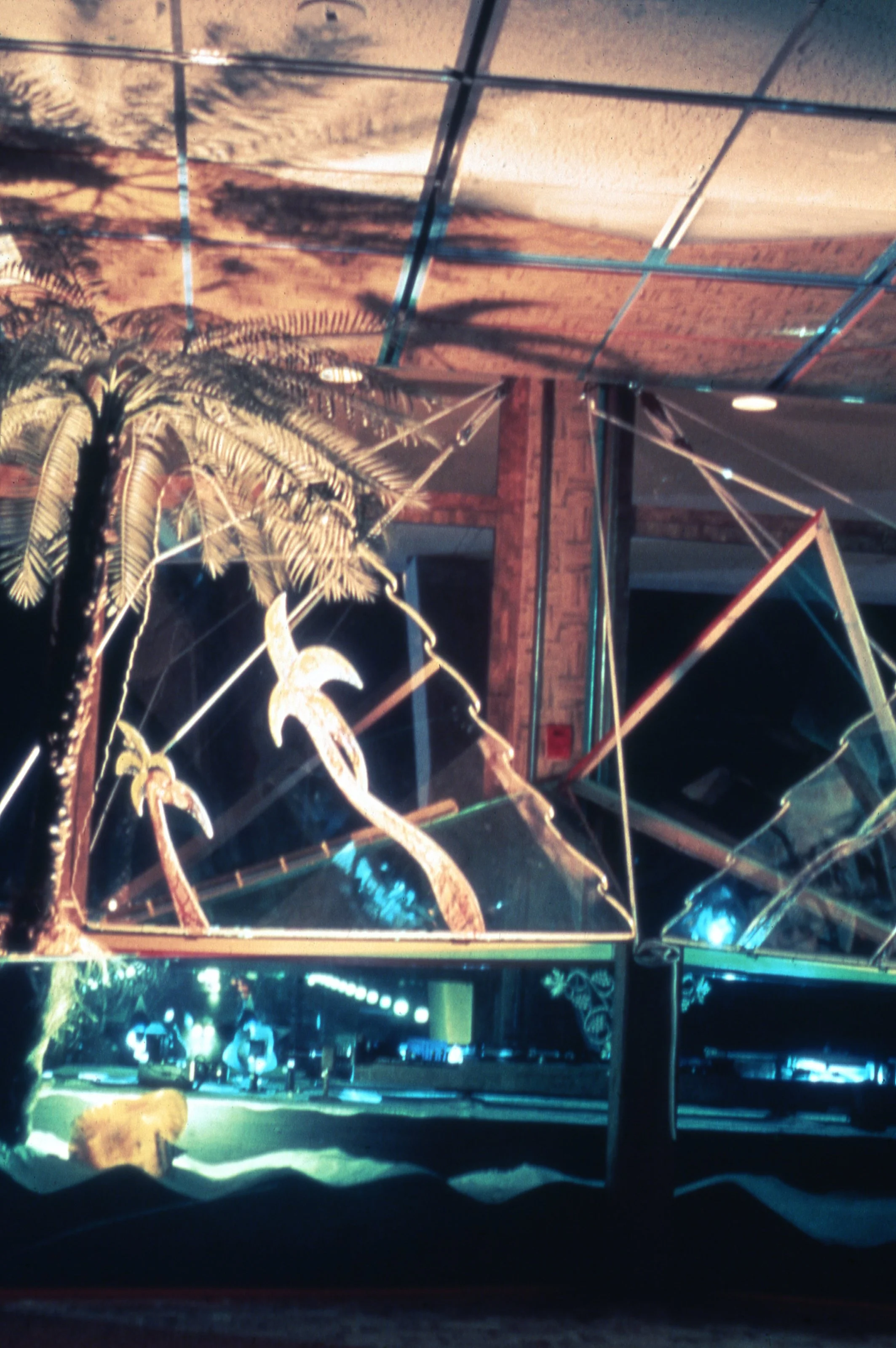
And they were the same kind of things you'd find on sailboats. There was even a cleat, a sailboat cleat down below that they could tie the ropes off on and so forth. And each one of those panels, there's two of them that would raise up, which were the top panels on that housing, and you raised and lowered them with the pulleys and the ropes that were all connected to it. Very ingenious. Glenn Anderson, 2022
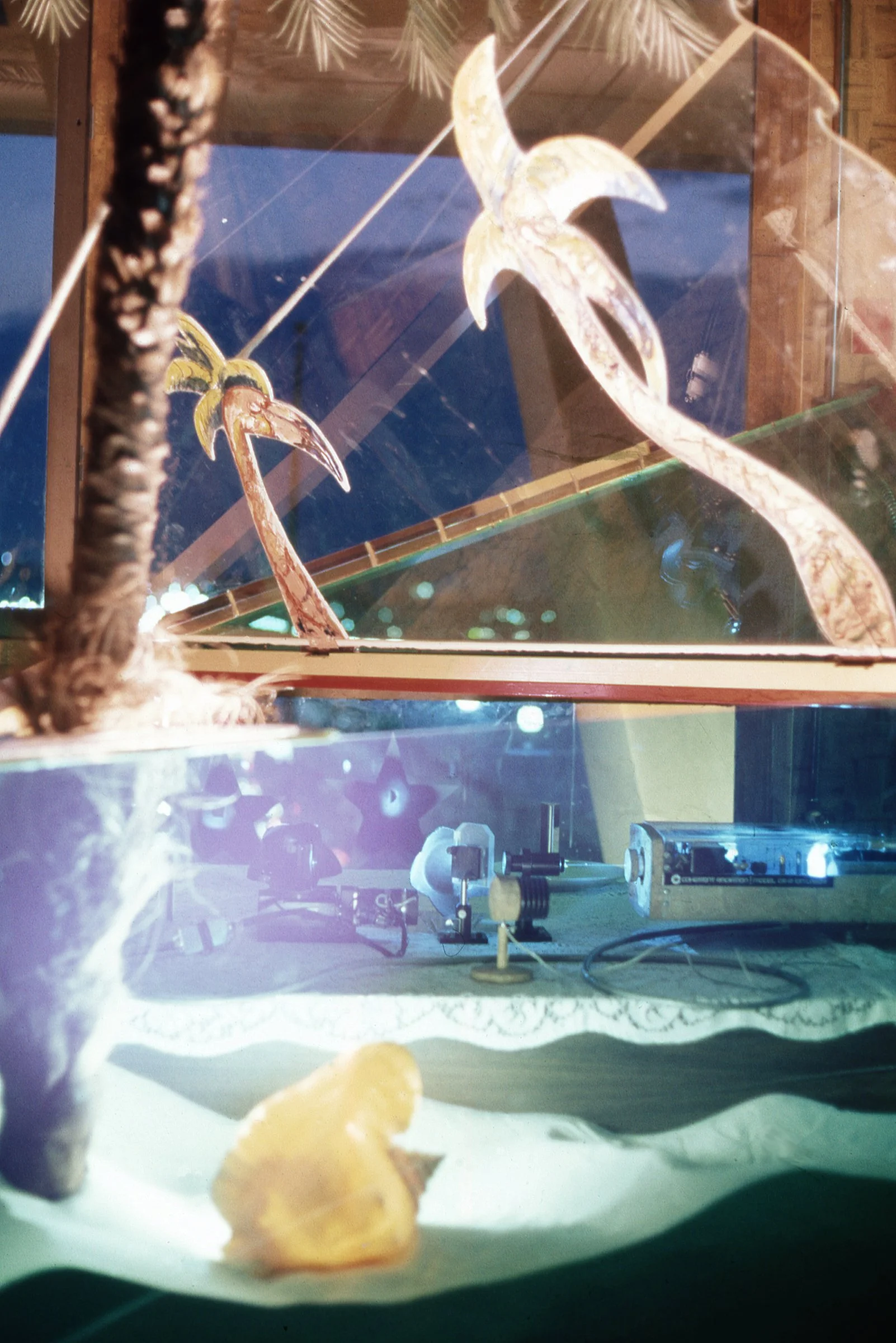
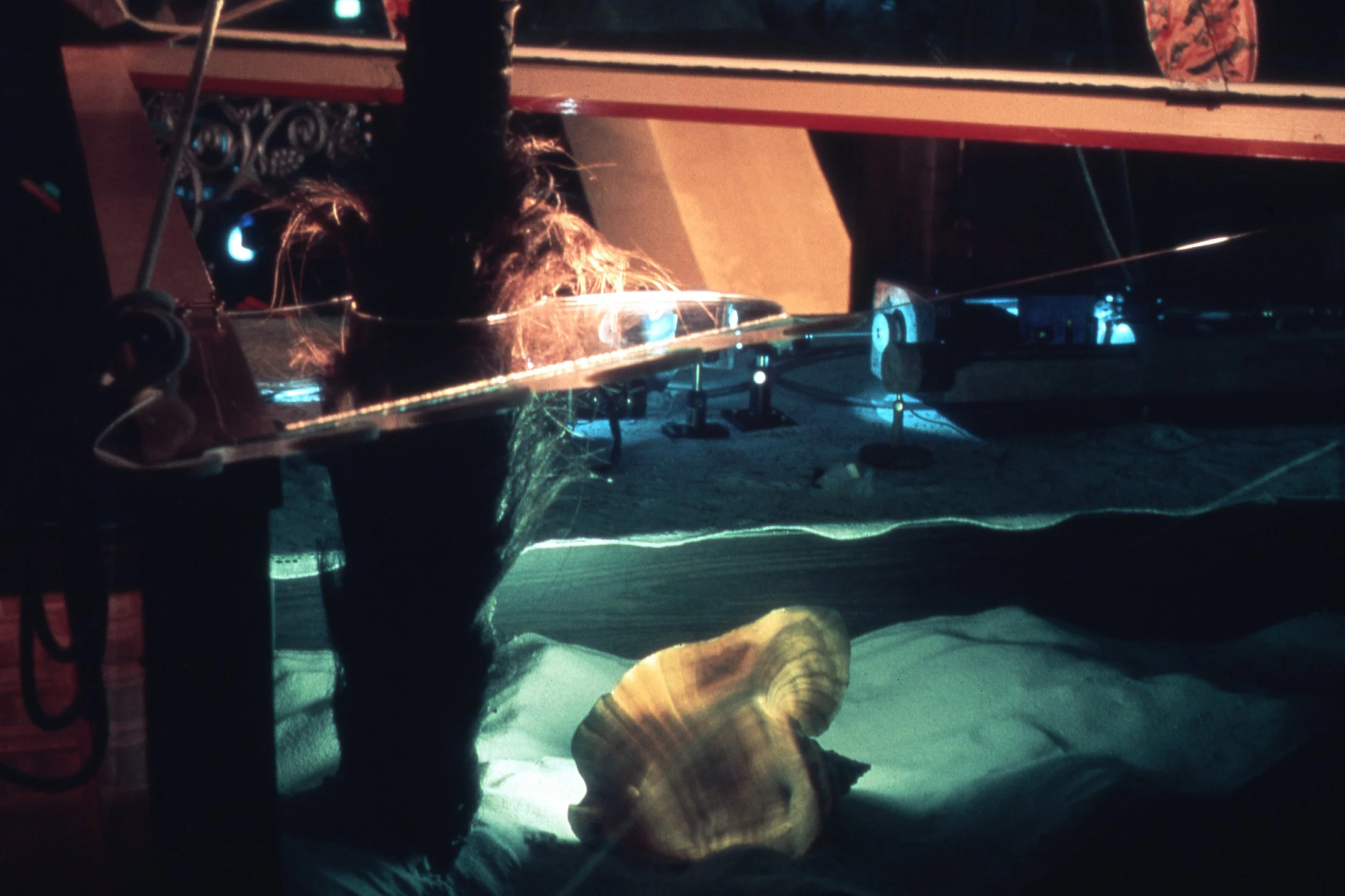
Okay, then half of the beam, the other half of the beam passed by the beam splitter over to the thing, the next piece of scientific equipment, which was called the beam mover. Glenn Anderson, 2022 transcript
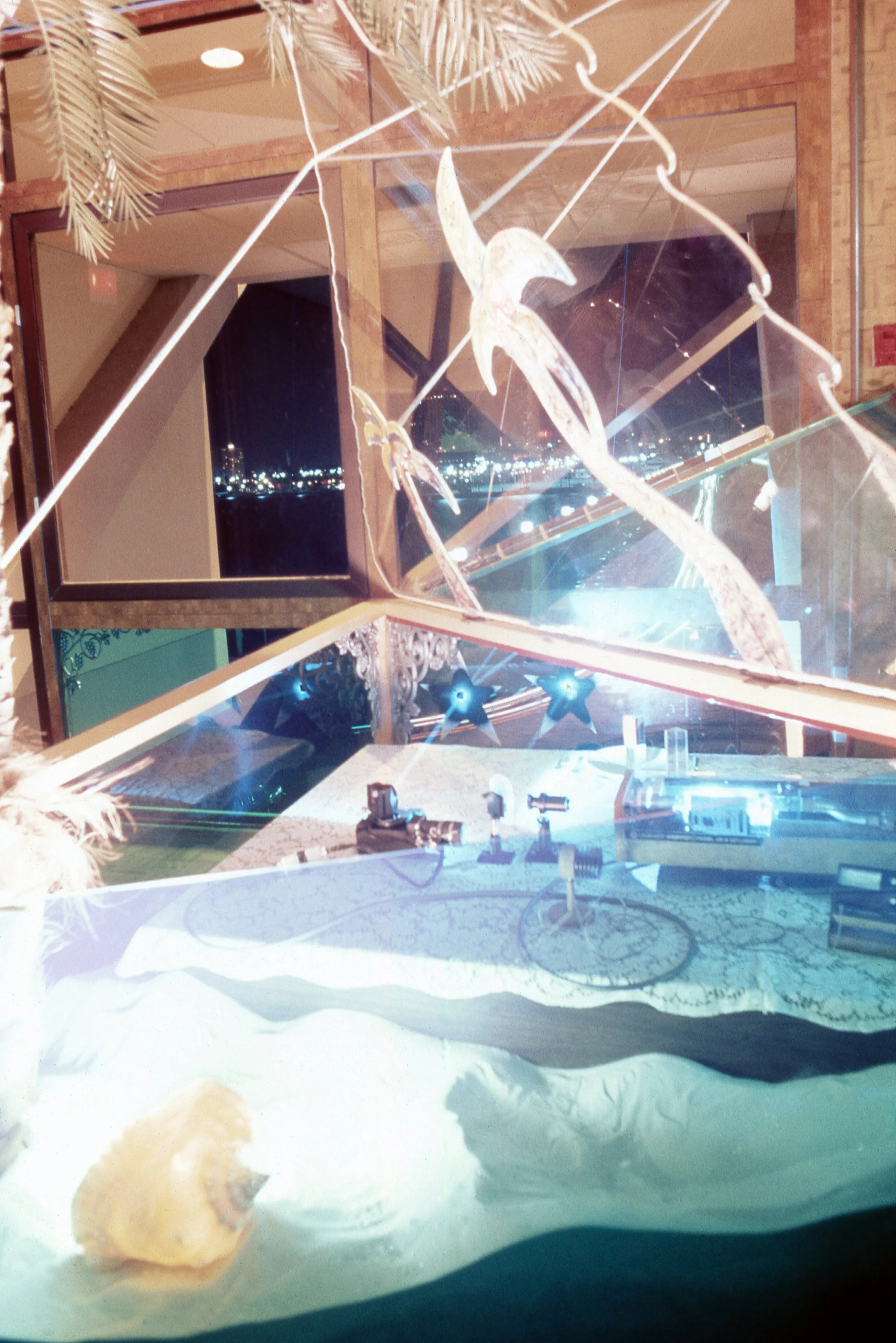
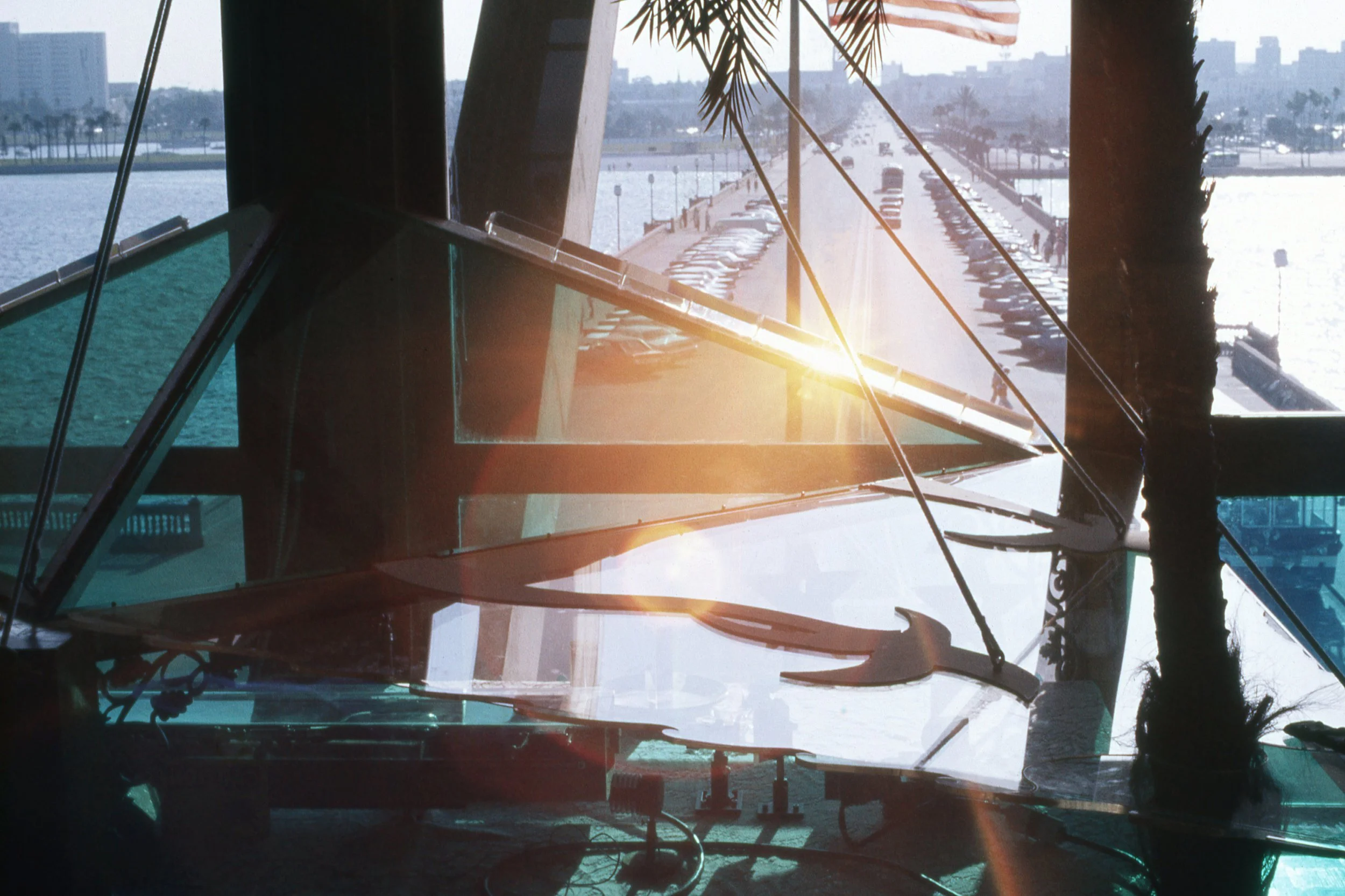
"Home on the Range included a prism piece. On top of the triangular housing and against the window was a row of prisms on each side. These faced the West. As the sun would move West in the afternoon, the prisms would catch light and put rainbows on the ceiling of the second floor starting at the East. (con't)
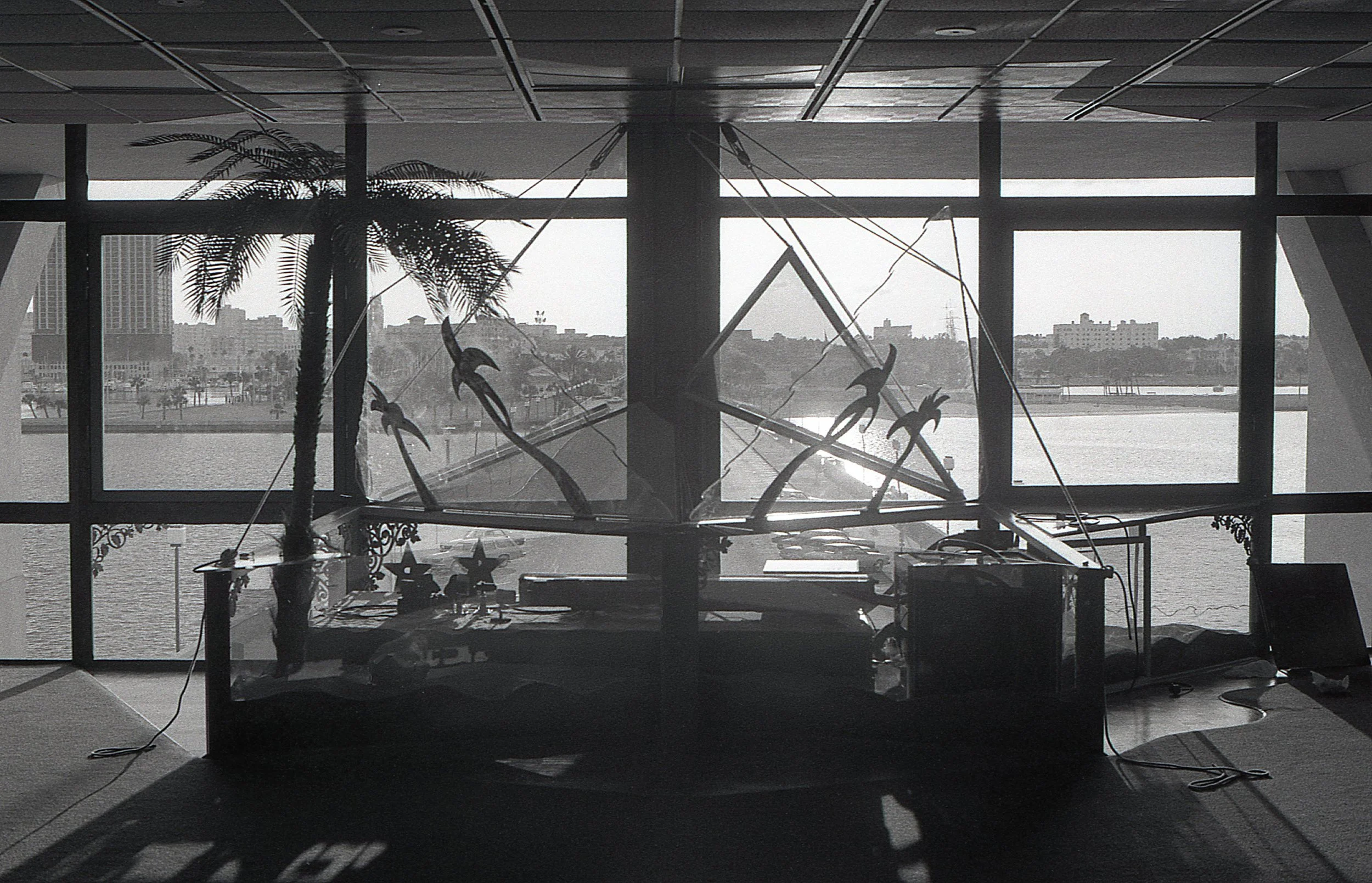
As time moved to sunset these rainbows would move slowly across the ceiling. At sunset, they would be directly over Home of the Range. On the solstices, they would be directly overhead as the sun would set directly down 2nd Avenue. The laser would come on creating Rockne’s own “green flash.” - Glenn Anderson, 2026
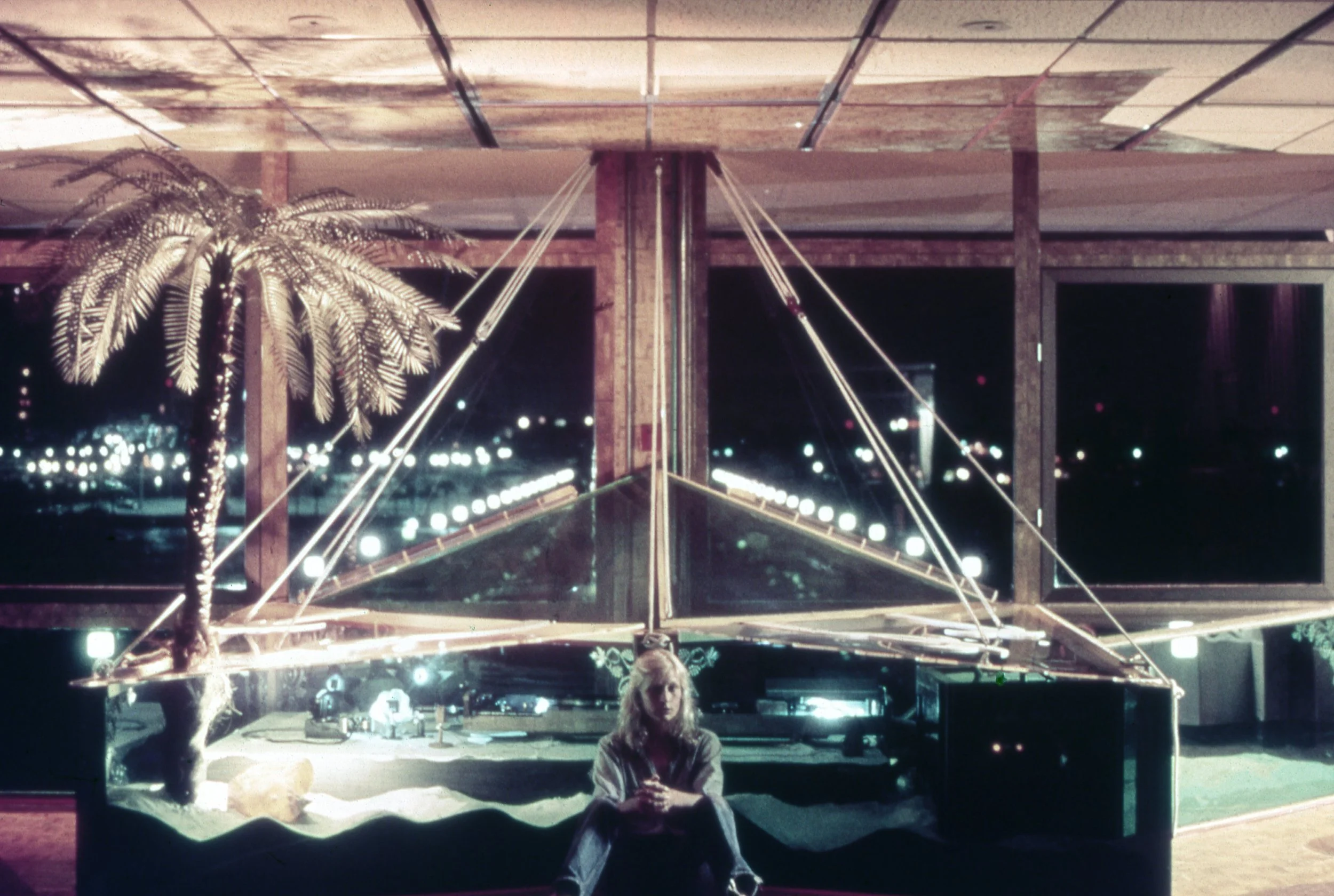
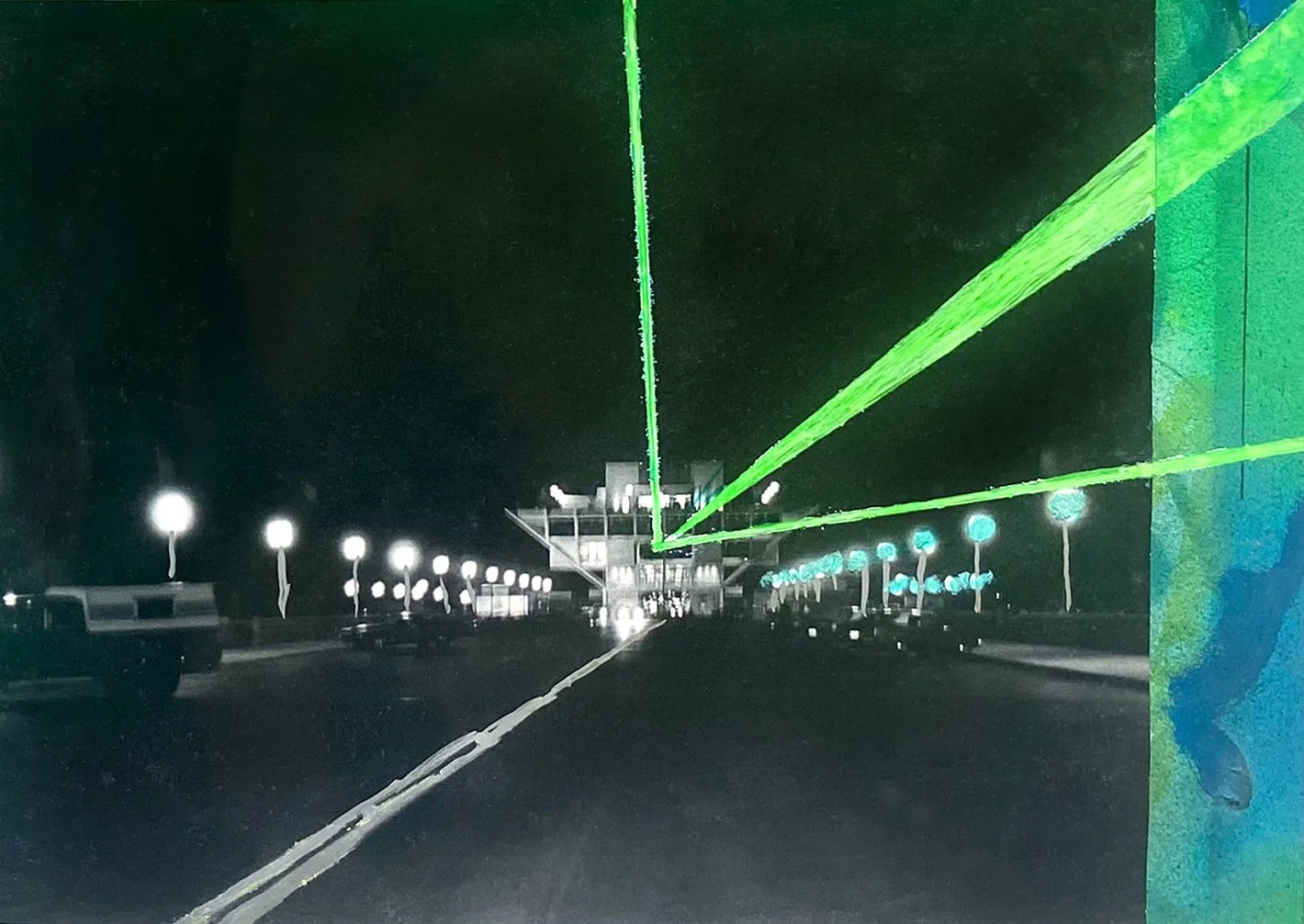

So that scientific table that had the laser and the beam mover and all that stuff on it, actually, he put a lace tablecloth on it first, so you can see the lace tablecloth edges from those pictures that you have. He had hand picked that someplace. It was somebody's family’s tablecloth, probably handed down in generations, ended up in a thrift shop, and he included that. And there were some other objects. I think there is a cup and saucer, and there was a plate, ah, yes, there was. He had actually set a place setting on the table, all of this being tongue in cheek, it was a laser table that he had made into a dining table. The items in that place setting were also things that people had brought down from up north someplace, and it had now passed into a thrift shop. And anyway, yeah, he really had a nicer sense of the community than most people who live here, I'll tell you that. Okay. So that was kind of the table. And then there were seashells in there, as you said, as a little girl, you enjoyed seashell looking and so forth. I think one of them was a conch, as I remember, right in the front.
There's a good part of the St. Petersburg downtown area that were actually built on shellmounds by the Timucua Indians long before Columbus. So there was a connection to the community with the shells and so forth. Then this connection that you were talking about with the ship, that the devices that they use to lift the covers so they could get into that box was block and tackle of pulleys. And they were the same kind of things you'd find on sailboats. There was even a cleat, a sailboat cleat down below that they could tie the ropes off on and so forth. And each one of those panels, there's two of them that would raise up, which were the top panels on that housing, and you raised and lowered them with the pulleys and the ropes that were all connected to it. Very ingenious. And of course, there was a lock on them, too. I don't remember what the locks look like, but each one of those panels were locked so that nobody could get into it. Glenn Anderson, 2022 transcript

1977 artist’s work debunks rumor of UFO in St. Pete
From the archives: Internet was once sure St. Pete Pier was site of UFO landing with a 300-drone light show coming for its first birthday, we look back on that time a laser show at the Pier was mistaken for a UFO sighting.
By Paul Guzzo, Tampa Bay Times
Archive published July 22, 2021
Originally published November 6, 2013
‘“It was something special,” said Glenn Anderson, executive director of the St. Petersburg Arts Commission from 1975-82. “He was one of the most avant-garde artists in the country and this was a new concept that no one had seen or heard of before him.”
Its novelty brought fear along with amazement.’
From the archives: In November 2013, Tampa Bay Times staff writer Paul Guzzo, who at the time worked for the Tampa Tribune, told this amusing tale debunking what was then a popular online rumor that the St. Pete Pier was once home to an alien landing. With a high-tech drone show coming to the skies July 31 for the Pier’s first birthday, we thought this would be fun to remember.
UFO enthusiasts around the world will be disappointed to learn that despite a current popular online rumor, the St. Petersburg Pier was not once home to an alien landing that has since been covered up by the U.S. government.
The online buzz began building this weekend when someone uploaded a firsthand account, written and illustrated by a mysterious author, of a supposed 1977 St. Petersburg close encounter of the third kind.
The materials include typed and handwritten accounts of a UFO landing in St. Petersburg in 1977 with corresponding sketches that depict spacemen, Revelations-styled five-headed beasts, and a drawing of a tornado emanating beams of light over the St. Petersburg Pier.
However, what the author actually witnessed was a then-groundbreaking art installation. And he was not the only one to mistake it for extraterrestrial activity.
In the 1970s, Rockne Krebs was a highly sought-after artist, the first to popularize the use of laser lights as public art. From 1976 through the early 1980s, St. Petersburg was home to one of his unique installations.
Prisms shooting lasers were erected atop the Pier, and mirrors were placed on downtown buildings to reflect the light and create 3-D web-like patterns over the city. Krebs dubbed it, “Starboard Home on the Range, Part VI.
“It was something special,” said Glenn Anderson, executive director of the St. Petersburg Arts Commission from 1975-82. “He was one of the most avant-garde artists in the country and this was a new concept that no one had seen or heard of before him.”
Its novelty brought fear along with amazement.
St. Petersburg newspaper reports from the 1970s detailed accounts of the lights misfiring through neighborhoods miles away, startling and confusing residents.
Almost 30 years after it was dismantled, the art installation is back in the news in a “War of the Worlds” type of way.
It’s being called “The Box of Crazy.”
The box is a reference to a wooden artist folio case that once belonged to a man named Daniel Christianson. The case was found on the side of the road in Asheville, N.C., in 2008.
Five years later, photos of its contents -- most of them drawn in the early 1980s -- were uploaded Sunday to the social media news website Reddit.
Online UFO forums immediately began buzzing.
The photos were uploaded by Asheville resident Dan Wickham. He said a friend who prefers to remain anonymous was the one who found Christianson’s folio case.
“It’s too late for me,” said Wickham. “Once I uploaded the photos I became part of the story.”
Little is known about Christianson” -- if he is alive, if he was a resident of St. Petersburg or was visiting, or how his case ended up on the side of the road in Asheville.
Modern-day UFO enthusiasts, equally unaware of the former St. Petersburg art installation, began discussing whether Christianson’s account gave proof of life on other planets.
Wickham said he did not intend to start an online alien conspiracy. He said he only wanted to share the strange and mysterious contents of the box and had no idea so many people would care about it or its original owner.
“He obviously saw something that changed him,” Wickham said of Christianson.
What Christianson witnessed was almost certainly a natural phenomenon occurring at the same time as the futuristic-looking art installation.
In notes found in the folio case, the author often makes reference to the date July 7, 1977. On that day, a tornado whipped through Pasco County.
While that was occurring, he did indeed see lights in the sky above the St. Petersburg Pier.
“You can imagine what a person seeing a laser light show for the first time might think if they had no idea what they saw,” Wickham said. “Then add in a tornado.”
“I understand why people would have been confused by it back then,” said Krebs’ daughter, Heather. “No one knew what to make of his art. It was all so new.”
Heather Krebs said more than 40 cities around the world celebrated her father’s laser light installations throughout his career. He was also a featured artist at the 1971 World’s Fair in Japan and honored with countless national awards and grants for his work. He died in October 2011.
As for Christianson, the man who was scared by Krebs’ St. Petersburg installation, the online forums are busy with people trying to find out more about the man they believe might have documented a UFO.
“I can’t believe this is happening,” Heather Krebs said. “It’s all so bizarre. My father was not into UFOs, but he would have loved this. He enjoyed the unusual and this is definitely unusual.” Paul Guzzo, Tampa Bay Times, 2013
WFLA News Channel 8, Tampa Bay Florida
Jul 18, 2022
St. Pete’s Almost UFO Sighting by: Deanna Moore
"In 1977, locals of Tampa Bay believed the St. Petersburg Pier was for sure the site of a multiple UFO landings. Only recently has this theory been de-bunked to reveal it was an art-installation with lasers gone wrong! Tampa Bay Times writer, Paul Guzzo, was the one who discovered it!"
“The laser pieces have taught me that I can’t ignore the visual realities around me,” Rockne Krebs.
Jim Moorhead, St. Petersburg Independent, 1976, The Laser Beams In Officially at Sunset.